
Last updated November 21, 2026
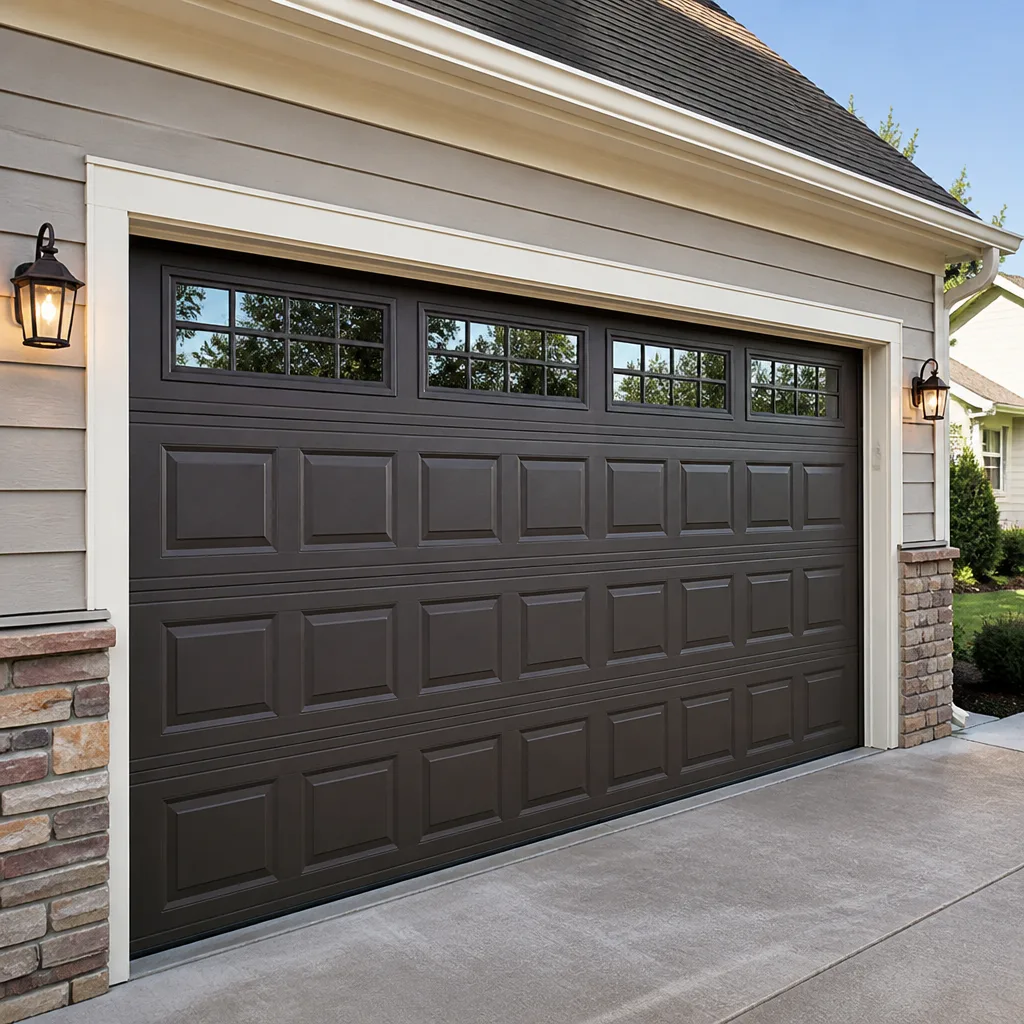 Raised-panel steel
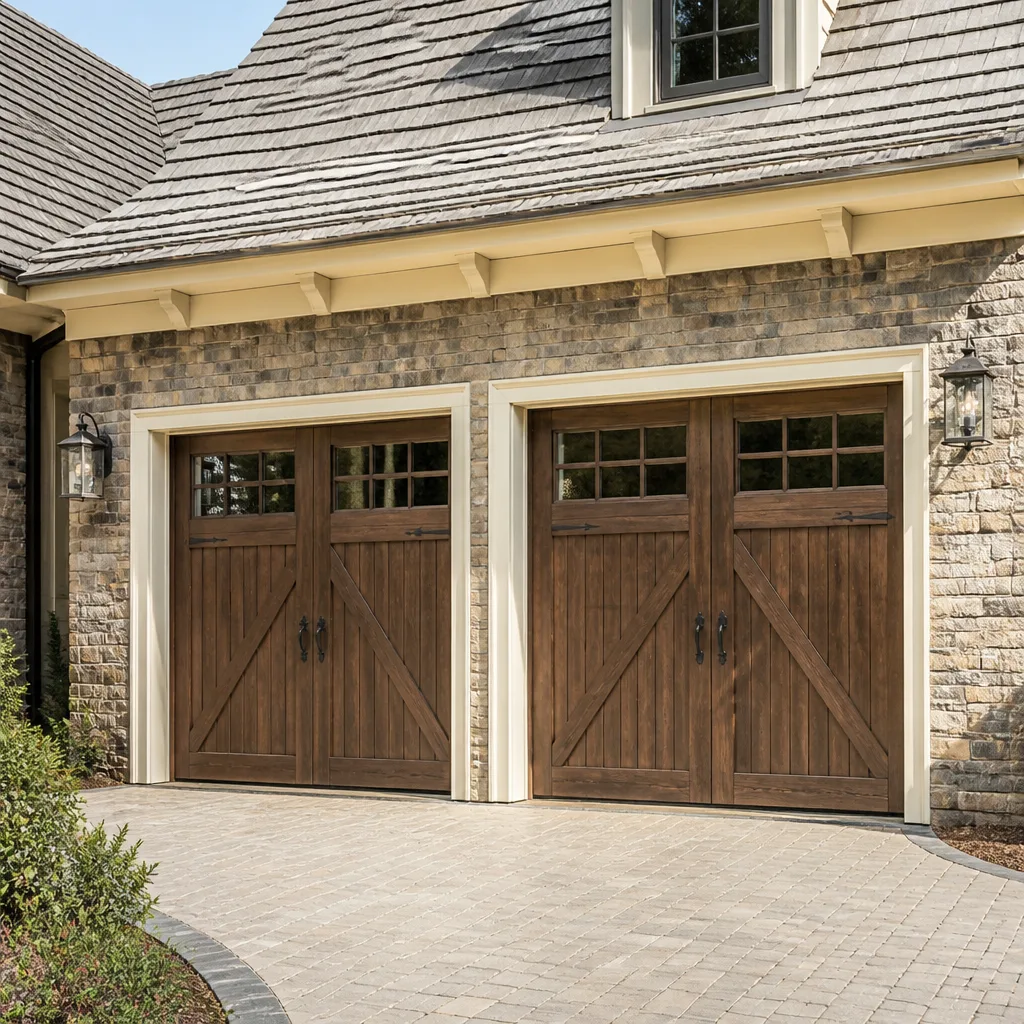 Carriage house
 Modern flush
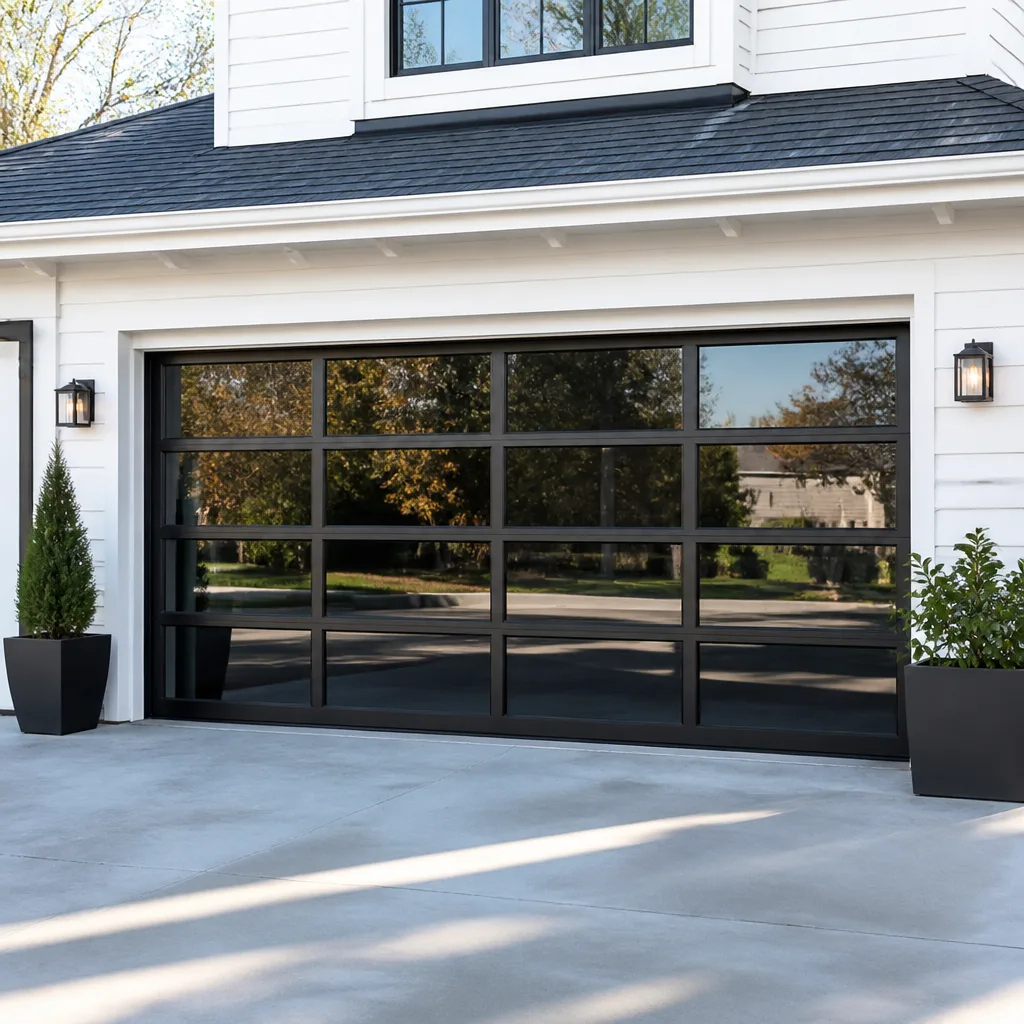 Full-view glass
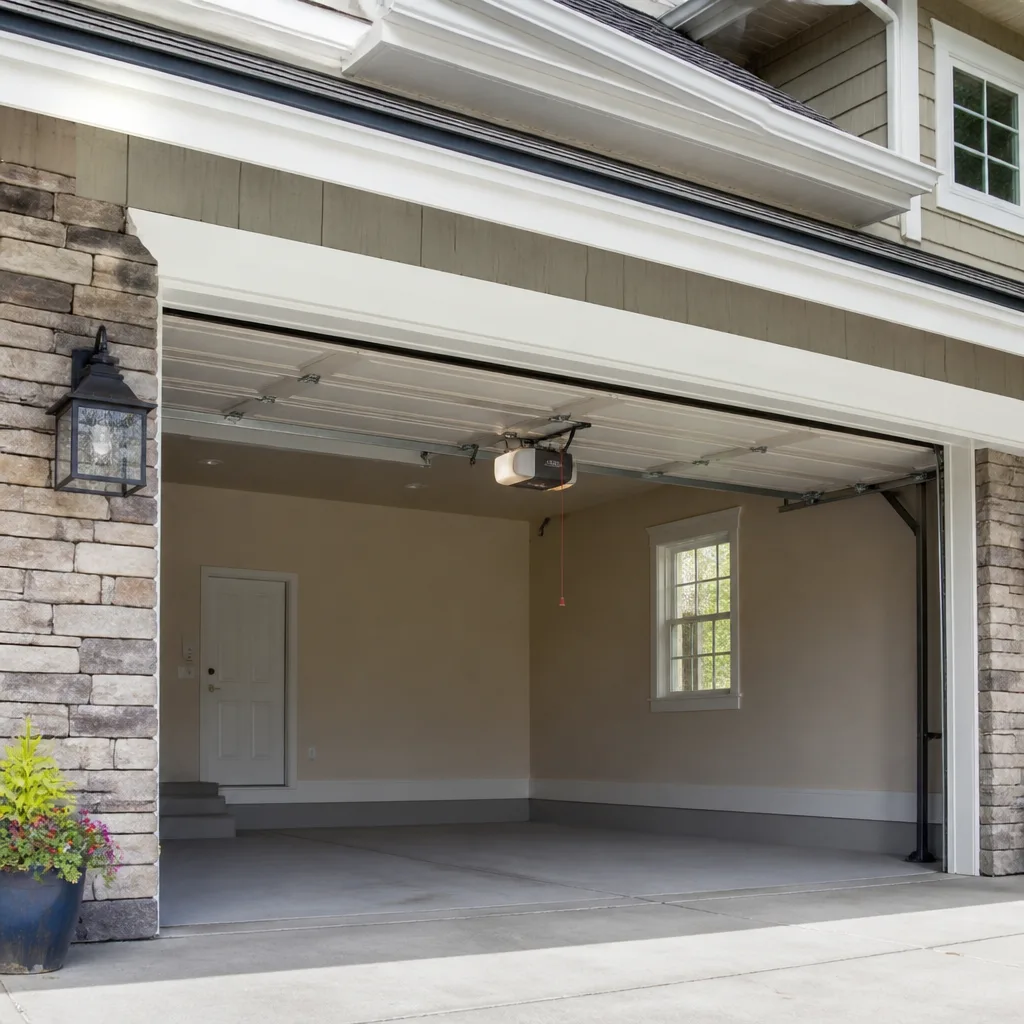 LiftMaster openers
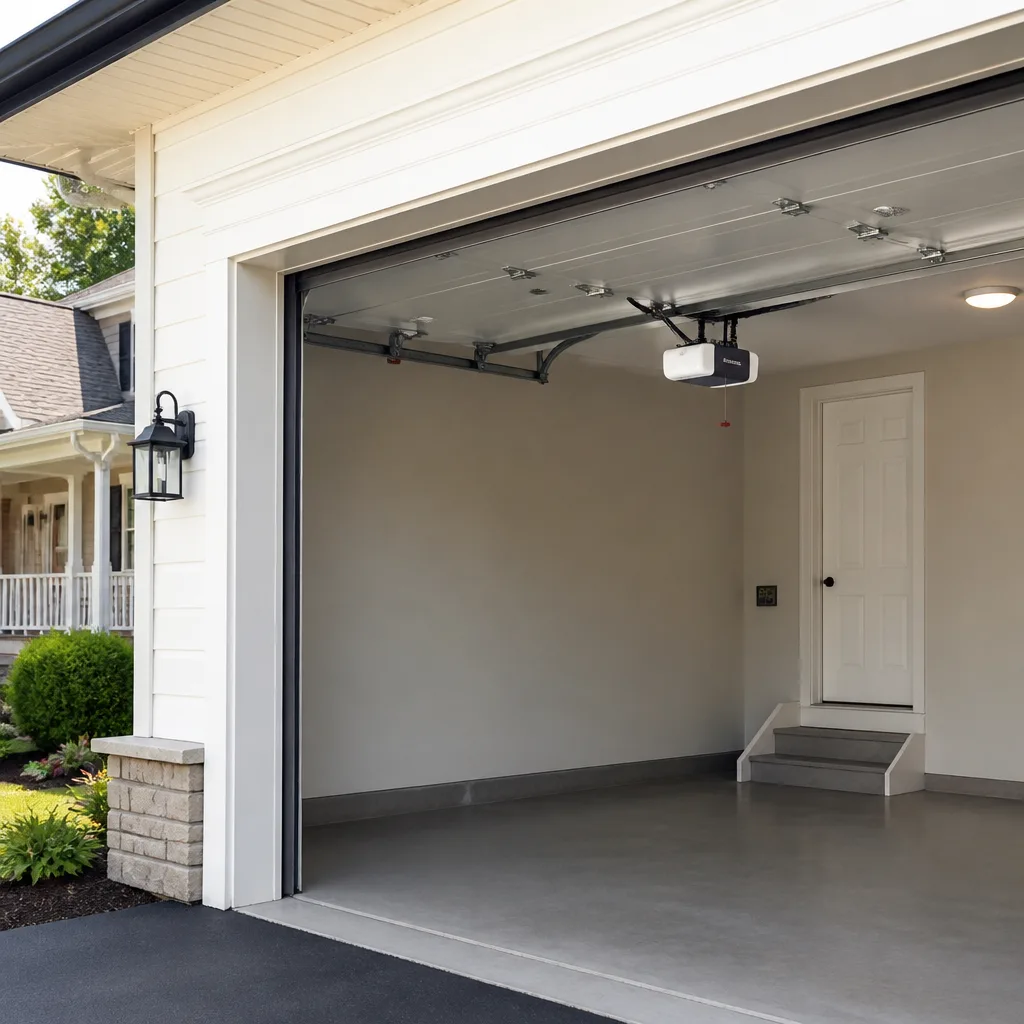 Chamberlain openers
Full 25-point door and opener safety check with every visit - springs, cables, rollers, tracks, and your LiftMaster or Chamberlain opener included
You get a price before we start. It does not change when the pro arrives.
Get your free estimateDIY vs Professional Garage Door: The Sugar Land Homeowner’s Decision Guide
Most homeowners lump every garage door repair into one bucket labeled “probably doable.” That’s the wrong way to think about it. The real dividing line isn’t skill, confidence, or how handy you were with your last home improvement project. It’s the injury and damage ceiling built into each specific task. Some jobs a competent Sugar Land homeowner can handle with a screwdriver and an afternoon. Others store enough energy in a single steel coil to break a wrist or take out an eye before you can react, and no amount of caution changes that physics. This guide separates the two with a simple green, yellow, red tiering so you know exactly which tasks are worth your time and which ones deserve a call.
Quick Answer
Safe DIY garage door tasks are limited to cleaning, lubrication, balancing checks, and replacing batteries or remote controls. Anything involving the springs, cables, bottom brackets, or the door’s structural lifting mechanism is professional-only work because those components are under extreme tension and fail without warning. Opener internal repairs, panel replacement, and full installation also belong to a trained technician, and doing them yourself often voids the manufacturer warranty on Genie, Clopay, Amarr, and Wayne Dalton equipment.
Styles & brands we work with
- Raised-panel steel
- Carriage house
- Modern flush
- Full-view glass
- LiftMaster openers
- Chamberlain openers
Table of Contents
- How Do You Sort Garage Door Tasks Into Green, Yellow, and Red?
- Why Are Torsion Springs the Most Dangerous Part of Your Door?
- What Tools Do You Actually Need for Yellow-Tier Jobs?
- How Does DIY Work Void Manufacturer Warranties?
- What Does a Failed DIY Repair Really Cost in Sugar Land?
- When Is Calling a Pro Faster Than Sourcing Parts Yourself?
What Makes Sugar Land’s Climate Hard on Garage Doors? - What Opener and Safety Checks Should You Do Before Calling Anyone?
How Do You Sort Garage Door Tasks Into Green, Yellow, and Red?
Think of every garage door job on a traffic light. Green means you’re fine to handle it in an afternoon. Yellow means the task is manageable but only with specific tools and genuine preparation. Red means the job carries a physical risk ceiling that makes DIY a bad bet regardless of how careful you are. Sorting the work this way removes the guesswork and stops homeowners from accidentally sliding into a project that could send them to urgent care.
Green tier – safe for a careful homeowner:
- Wiping down panels and inspecting the door for dents, rust, or separation
- Applying a silicone-based lubricant to rollers, hinges, and tracks
- Testing the door’s balance by disconnecting the opener and lifting it halfway by hand
- Cleaning the photo-eye safety sensors and checking they’re aligned
- Replacing remote batteries and reprogramming a remote to your opener
- Clearing obstructions from the track and tightening visible hinge bolts with a socket set
- Testing the auto-reverse by placing a roll of paper towels in the door’s path
Yellow tier – proceed with caution and the right equipment:
- Replacing a broken roller set
- Replacing a bent hinge (with the door closed and the opener disconnected)
- Replacing bottom weather seal or threshold gasket
- Adjusting opener force and travel limits on newer openers
- Replacing an opener remote or keypad on a Genie or LiftMaster unit
Red tier – professional only, no exceptions:
- Torsion or extension spring replacement
- Cable replacement or tension adjustment
- Bottom bracket work
- Off-track door recovery
- Panel replacement and panel sectioning
- Opener motor or logic board repair
- Full door installation and door replacement
In our experience across Sugar Land homes, the green tier is where most maintenance failures begin – a door that groans for months because nobody lubricated the rollers. The red tier is where real injuries happen. There’s rarely a middle ground where guessing works out well.
Why Are Torsion Springs the Most Dangerous Part of Your Door?
A torsion spring is a coiled steel tube holding tension measured in dozens or hundreds of foot-pounds, and when it fails, it releases that stored energy in a fraction of a second. The U.S. Consumer Product Safety Commission tracks garage door injuries as a distinct product category precisely because of this, and the reported figure of 20,000+ emergency room visits annually isn’t a talking point – it’s a measured count of what happens when homeowners underestimate the springs. This is the one repair where being “mechanically inclined” offers almost no protection.
Here’s the part DIY guides on the internet skip over. A tensioned spring doesn’t warn you when it’s about to go. There’s no hiss, no visible slow-down, no moment where you can pull your hand away. When a torsion spring snaps, the winding bar can throw violently, the spring coils can shatter, and the door itself can drop. In Sugar Land homes, where many doors sit on double-car garages with high-tension springs sized for a heavy insulated panel, the forces involved are larger than what a lighter single-car setup would carry. That’s not a reason to panic – it’s a reason to know the limit.
What makes this harder is the finished look. A freshly wound spring looks like an ordinary metal cylinder sitting on a bar above the door. The danger is invisible until the moment it isn’t. That’s why our garage door spring repair work starts with proper winding bars and controlled release – spring replacement done right, done safely is the only version of spring work worth offering.
If your door makes a loud bang from the garage, jerks unevenly, or hangs partway up, stop using the opener immediately. Don’t try to raise the panel by hand. Keep the door closed if it will close, keep kids and pets away from the garage, and treat it as a red-tier issue until a trained technician sees it. Same-day and emergency service exists for exactly this scenario because an unsecured or jammed door leaves your home compromised.
What Tools Do You Actually Need for Yellow-Tier Jobs?
The tools turn what looks like a simple afternoon job into a real decision. Yellow-tier tasks are manageable, but only when the right equipment is on hand – and “I’ll be careful with a screwdriver instead” is the exact reasoning that turns a ten-minute repair into a broken hinge or a crushed panel. Before starting any yellow-tier repair, check this list against what’s actually in your garage.
- Adjustable locking pliers (Vise-Grips) – to hold a door panel in position on the track while you work on a hinge or roller
- C-clamps or locking clamps – to pin the door to the vertical track so a section can’t slide down on you
- A stepladder rated for your weight – most of these jobs happen above your head, and wobbling on a kitchen chair is how falls happen
- Socket wrench set (3/8″ drive) – for hinge bolts, track bolts, and bracket hardware that a screwdriver will strip
- Safety glasses and work gloves – small parts under tension can release under your hand when you loosen a bolt
- Silicone-based lubricant (not WD-40) – for rollers and hinges; petroleum-based spray attracts grit in Texas dust
- A second person – for anything involving a panel above four feet, having someone steady the ladder or hold a section is the difference between a repair and an injury
If any of those tools are missing, the calculation changes. A homeowner who doesn’t own locking pliers or clamps isn’t being cautious by trying anyway – they’re relying on luck. In our experience, most yellow-tier jobs that turn into red-tier repairs started with a missing tool and a “this will probably hold.” That’s why we tell Sugar Land callers straight: if you don’t have the right clamps and a proper ladder, book the appointment.
One more point on yellow-tier work: always disconnect the opener and lock the door in the fully open position before touching any hardware. If your opener doesn’t have a manual release you can reach, don’t start a yellow-tier job at all.
How Does DIY Work Void Manufacturer Warranties?
Most major garage door and opener warranties exclude damage caused by improper installation, unauthorized repair, or work done by anyone other than a qualified technician. That’s not a scare clause – it’s standard language in homeowner manuals for Genie, Clopay, Amarr, and Wayne Dalton. The warranty usually covers defects in materials and workmanship, not the aftermath of a homeowner attempting a repair the manufacturer considers a technician-only task.
What this means practically is a simple checklist before you touch anything beyond green-tier tasks:
- Read the warranty language on your specific door or opener. Clopay doors have different exclusions than Amarr or Wayne Dalton, and opener warranties from Genie are separate from door warranties.
- Look for “installation” and “repair” clauses. Many warranties specifically exclude door spring work performed by non-professionals.
- Check whether your opener is still under a manufacturer term. If it is, a DIY motherboard repair on a Genie or Chamberlain unit almost certainly voids the remaining coverage.
- Note that panel replacement is a warranty-sensitive task. A badly aligned new panel can void coverage on the surrounding sections.
We work on the brand you already have, so brand-specific warranty language is part of every conversation before a repair begins. When you call garage door opener repair support on a LiftMaster or Genie system, one of the first questions we’ll ask is what brand and model you’re running. That’s not a sales pitch – it’s how we keep a covered repair covered and a voided one from getting worse.
One thing worth flagging for homes with newer doors: many builders in Sugar Land install branded systems from Clopay or Amarr, and the original paperwork lives somewhere in a closing folder. If you can’t find it, the manufacturer can often confirm warranty status from the door’s serial plate. That five-minute check is worth doing before you buy parts.
What Does a Failed DIY Repair Really Cost in Sugar Land?
The visible cost of a failed DIY repair is the parts you bought and broke. The real cost is the secondary damage a partial repair causes before it lets go. A door that comes off track after a botched roller swap can bend panels, twist the top section, snap a cable, or strain the opener’s drive gear – all repairs that cost more than the original job would have. The numbers below are typical Sugar Land estimates. The written estimate you receive sets your final price.
| Job After the DIY Attempt | Typical Sugar Land Estimate (per spring where spring work) |
|---|---|
| Single torsion spring replacement | $180-$340 |
| Matched pair of torsion springs | about twice the single-spring range |
| Broken cable replacement (per cable) | $100-$200 |
| Off-track recovery and panel realignment | $150-$400 |
| Opener drive gear or logic board repair | $150-$350 |
| Full section or panel replacement | $200-$600 per panel depending on style |
| Full door replacement after structural damage | varies widely, typically $900-$3,000 |
Now the honest math. A homeowner trying to save on a single spring replacement, buying a bare spring online and winding it with a pair of borrowed bars, is facing two possible outcomes. Best case, they succeed and save the repair cost – though the spring is now untested, unwarranted, and often the wrong size. Worst case, the door comes off track, a panel is bent, or worse, and the final repair bill includes both the original spring AND the damage that followed. In our experience, most DIY spring attempts end in one of three ways: a snapped spring, a bent panel, or a call to us from a garage with the door stuck down.
Getting a garage door repair estimate first is free, and it prevents the whole second phase. If you’re staring at a partially disassembled door right now, call (833) 508-9229. We answer 24/7. Fast dispatch from 7am to 7pm, Sunday through Friday. Emergency service exists for exactly this scenario.
When Is Calling a Pro Faster Than Sourcing Parts Yourself?
For anything branded and specific, the professional route is almost always faster. Here’s why. A torsion spring has to match the door’s weight, height, cycle rating, and wire gauge, and getting that wrong means the replacement fails early or won’t hold the door. A homeowner sourcing the correct spring independently is looking at identifying the door model, weighing it or looking it up, matching wire diameter, ordering from a supplier who may or may not have it, and waiting for delivery – versus a technician who arrives with the answer already worked out for your door.
Compare the workflows:
- DIY sourcing path: identify the door model (often a serial plate hidden behind the opener arm), measure wire gauge, call a supplier, wait for delivery, decide on winding bars, watch a video, and then attempt a red-tier job with the wrong tools.
- Professional path: call (833) 508-9229, describe what’s happening, get a free estimate, and have a technician arrive with the right spring for a Clopay, Amarr, or Wayne Dalton door already sized and ready.
For openers the gap is even wider. Modern openers from Chamberlain and LiftMaster include myQ smart-home integration. Opener repairs on those systems aren’t a matter of swapping a battery – they involve logic boards, travel limit calibration, force sensitivity matched to the door’s weight, and app re-pairing. A homeowner without the right diagnostic equipment can easily spend a weekend buying the wrong part twice. We handle opener repairs on both legacy mechanical units and modern smart-home systems, which means the diagnosis isn’t a guess based on your brand’s reputation alone.
Our technicians have up to 15 years of experience, and that time is mostly spent learning what fails first on which brand. That’s the reason a repair call in Sugar Land frequently goes from first ring to diagnosis to a plan in a single visit. Call (833) 508-9229 for a free estimate and we’ll tell you honestly whether the job is worth doing professionally or whether it’s a green-tier task you can handle.
What Makes Sugar Land’s Climate Hard on Garage Doors?
Sugar Land’s heat and humidity are hard on the moving parts of a garage door in ways that don’t show up in colder markets. Ambient heat inside an attached garage regularly pushes past 100 degrees in summer, and that heat expands and contracts the steel in tracks, hinges, and springs. Humidity accelerates rust on unpainted hardware and causes lubricant to thin and run off. The result isn’t a failure on one particular day – it’s a door that accumulates small problems until something snaps or seizes at the worst moment.
What that means for the decision guide:
- Lubrication happens more often here. A twice-a-year silicone lubricant pass on rollers and hinges is the single best green-tier habit in Sugar Land’s climate.
- Rust-prone hardware fails earlier. Hinge bolts, track brackets, and bottom brackets on older doors should be inspected for rust during your green-tier check.
- Springs work harder in the heat. A spring is a stressed steel component from the day it’s installed, and Texas heat shortens the safe interval between inspections.
- Photo-eye sensors suffer dust. Sugar Land’s spring dust and pollen coat safety sensors quickly; a monthly wipe is a five-minute green-tier habit.
- Weather seal deteriorates faster. The rubber gasket at the bottom of the door cracks and compresses in heat, which lets water and pests in – an easy yellow-tier replacement if you have the right tools.
Our advice to Sugar Land homeowners is to treat the garage door like any other summer-stressed system in the house. Do the green-tier checks monthly in the hot months, do them less often once temperatures drop in the fall, and book a professional inspection once a year if the door is over a decade old or has any branded components that have already been repaired once. If you want the pro side of the decision handled by one company across the life of your door, Sugar Land Garage Door Repair Pros covers repair, opener work, spring replacement, and full installation under the same roof.
One more local note: Sugar Land homes built in the 2000s and 2010s often came with builder-installed doors from Clopay or Wayne Dalton, and many of those are now at the age where the first major spring replacement is due. If your door is from that era and hasn’t had spring work done yet, budget for it rather than waiting for the bang from the garage.
What Opener and Safety Checks Should You Do Before Calling Anyone?
Before you pick up the phone, run these checks. They’re free, they’re fast, and they’ll either confirm the problem is small or tell a technician exactly what’s happening when you call. Both outcomes save time.
- Test the door balance. Disconnect the opener using the manual release cord, lift the door halfway by hand, and let go. A balanced door stays put. A door that drops or drifts means a spring problem – stop here and treat it as a red-tier issue.
- Check the photo-eye sensors. Wipe the lenses and confirm both LEDs are solid, then block the beam with your hand and confirm the door reverses. If it doesn’t, don’t operate the door until that’s fixed.
- Test the auto-reverse. Place a roll of paper towels on the ground in the door’s path and close the door. It should reverse on contact. If it doesn’t, adjust the force setting or call for service.
- Listen for sounds. A grinding, popping, or scraping sound during travel points to track misalignment, worn rollers, or a failing bearing plate.
- Watch the door travel. A door that hesitates, jerks, or lurches on the way up is usually a spring or cable issue, and it should not be operated further until it’s looked at.
- Write down your door and opener brand and model. Amarr, Clopay, Genie, and Chamberlain all have model plates on the door or opener housing. That one piece of information turns a general repair call into a specific one.
If a check fails on something red-tier, don’t test it repeatedly to see if it “comes back.” Every cycle works the failing part harder. Call for garage door repair and describe exactly what you saw – the way the door failed is often the fastest diagnosis a technician gets.
Common Mistakes to Avoid
- Trying to wind or unwind a torsion spring without winding bars. The spring is under enough stored energy to cause serious injury, and a screwdriver or pair of pliers can’t control the release. If you don’t own winding bars and know how to use them, this is professional-only work.
- Assuming a snapped spring means the opener is fine. Running a door with a broken spring forces the opener to lift the entire panel weight, which frequently burns out the drive motor or gear. Stop using the opener immediately when the door doesn’t lift evenly.
- Spraying WD-40 on rollers and tracks. Petroleum spray attracts grit and dust, which is worse than no lubricant in Sugar Land’s dusty spring air. Use a silicone-based lubricant instead.
- Adjusting opener force to fix a heavy door. Cranking up the force setting to get the door moving masks the real problem – usually a worn spring – and burns the motor out faster. Fix the cause, not the symptom.
- Replacing one torsion spring of a pair. A matched pair wears together, and replacing only one leaves you with two springs of different remaining life. The pair is usually replaced together, so a pair costs about twice the single-spring range.
- Buying a spring online without matching the door. Torsion springs are sized to wire gauge, inside diameter, and door weight. A wrong spring can fail within weeks or fail to lift the door at all, and it may void the door’s warranty.
- Ignoring a slow-closing or drifting door. A door that won’t hold its halfway position is telling you the spring’s tension is off. Ignoring it while the door still “works” is how a two-hour call becomes an emergency.
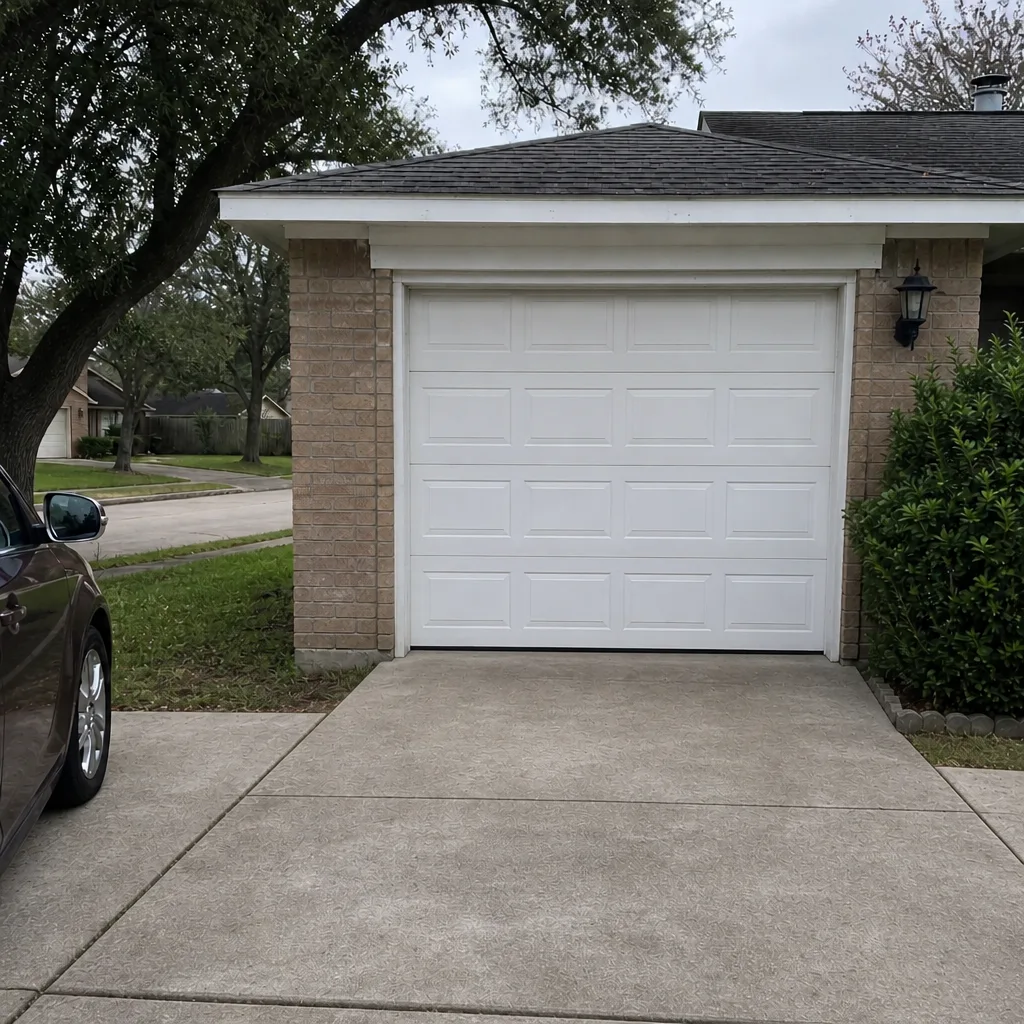
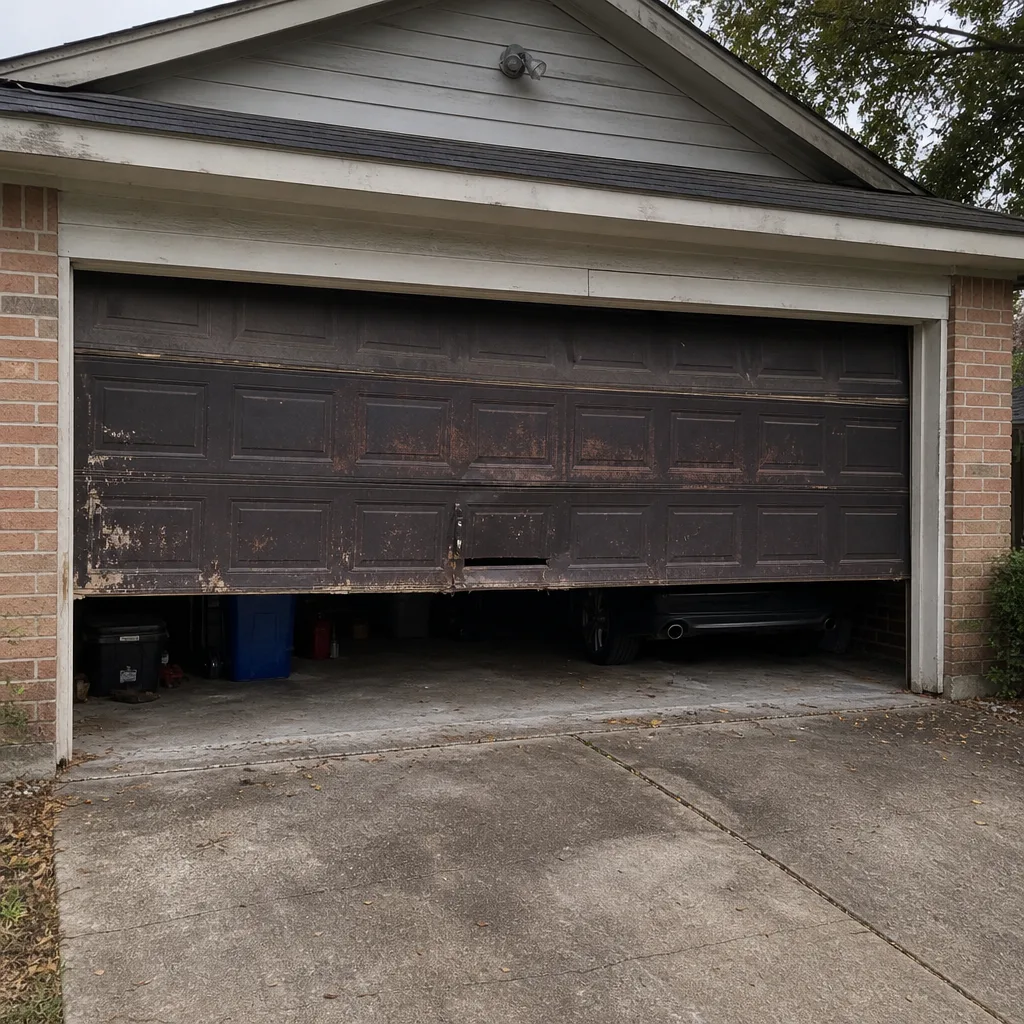
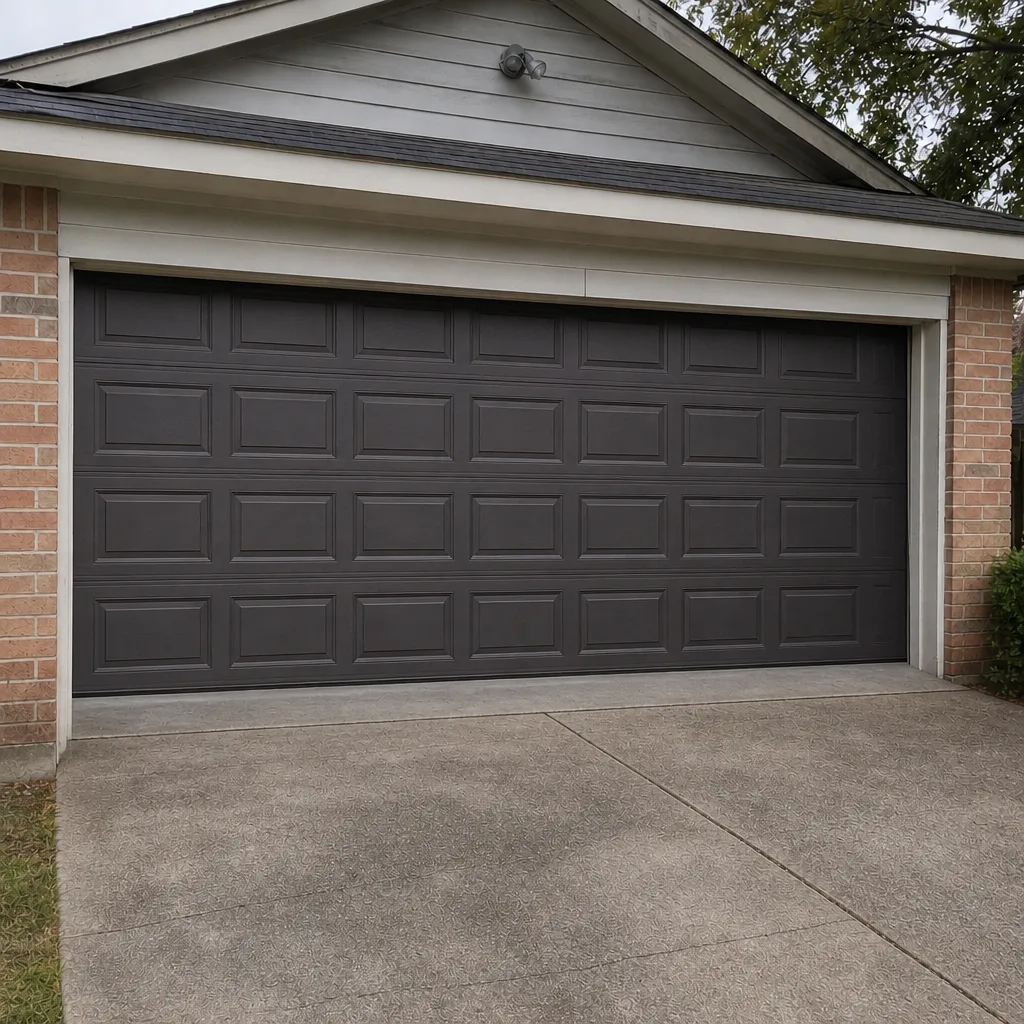
See the difference
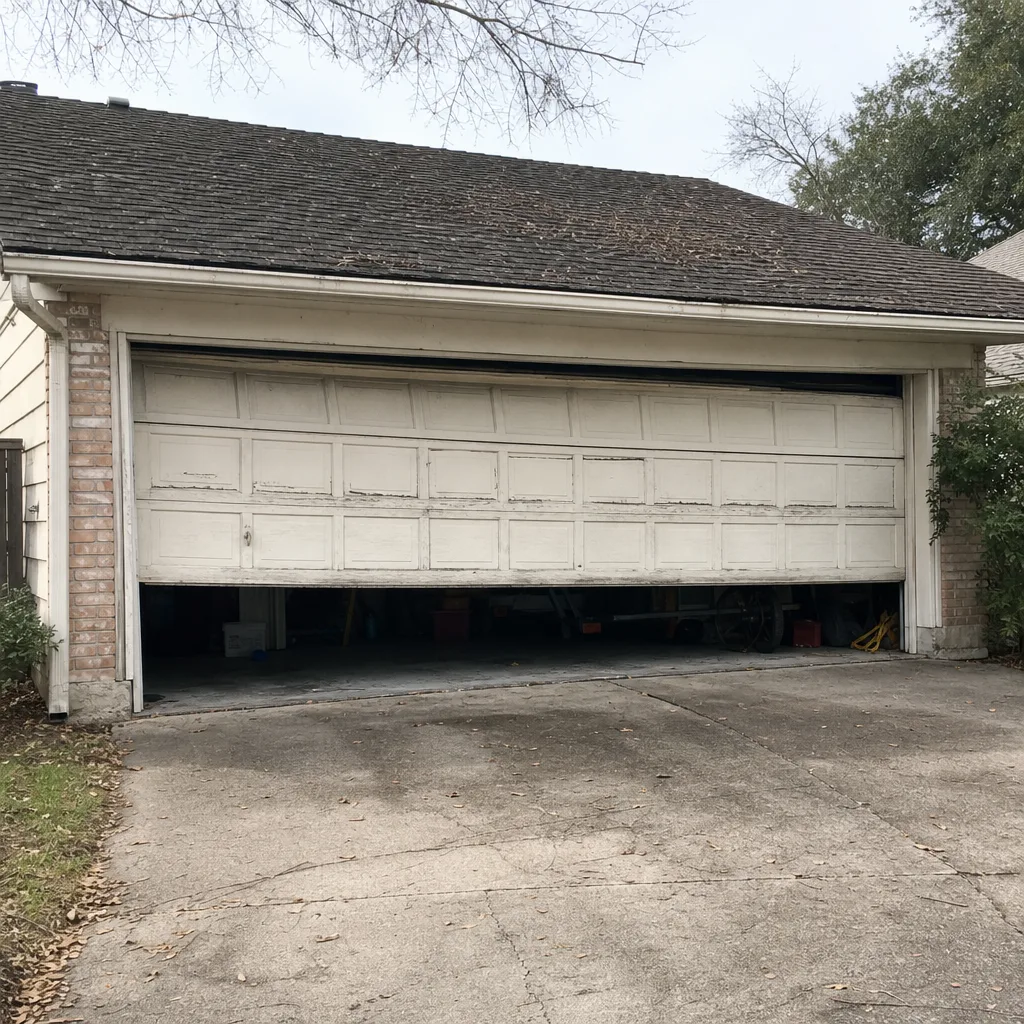 Before
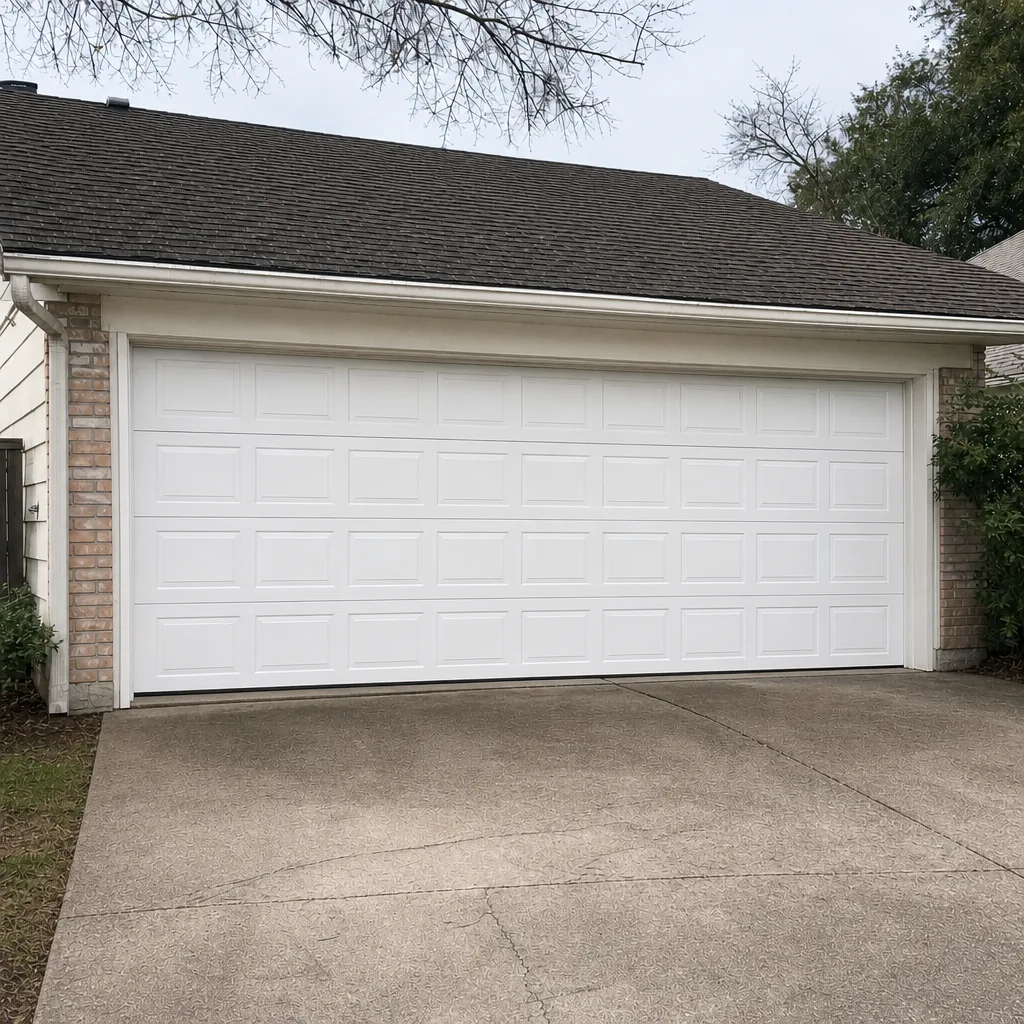 After
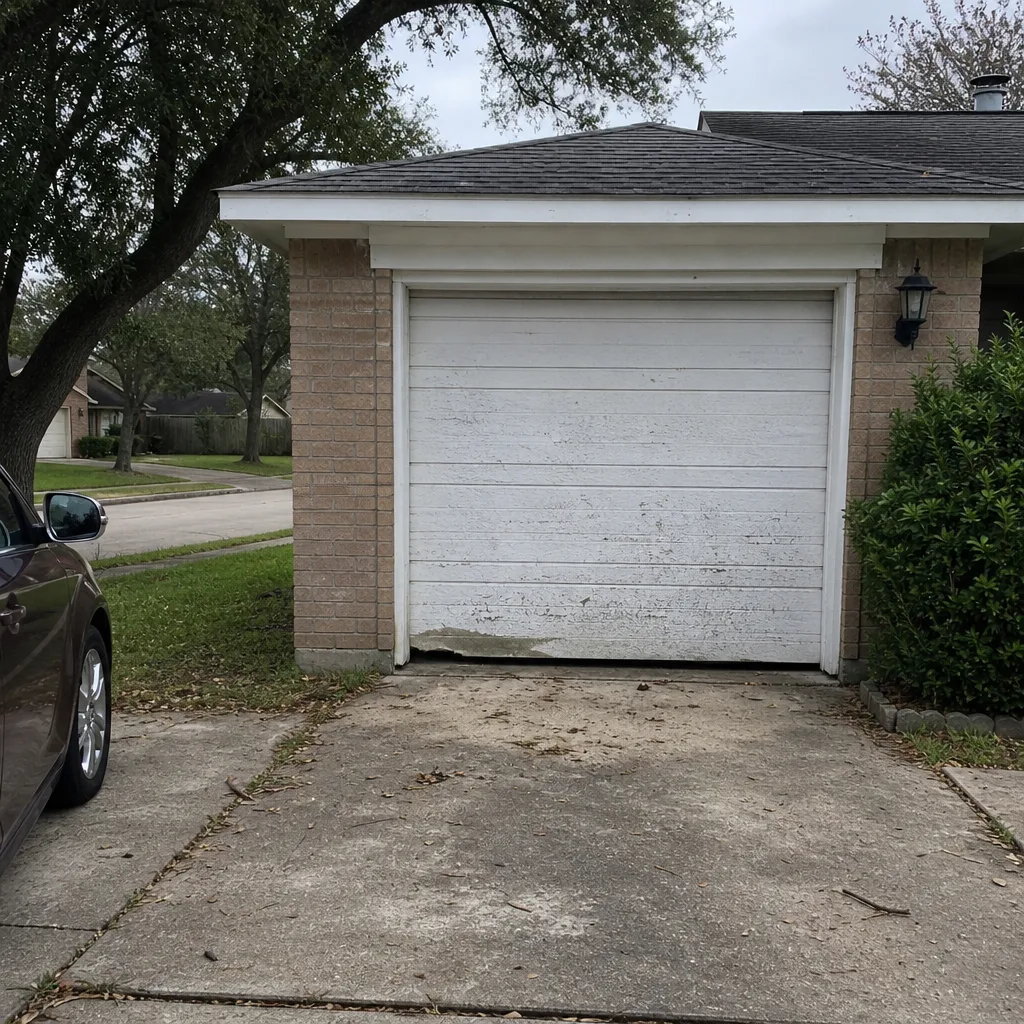 Before
 After
 Before
 After
When to Call a Professional
Call a professional the moment the problem lands in the spring, cable, or bottom-bracket category. Call for any door that’s off track, any door that won’t balance in the halfway position, any opener that grinds, hums without moving, or reverses unexpectedly, and any damage to panels or panels that have separated from their sections. Also call if you’re bonding out of the yellow tier – some homeowners start a roller replacement, find a weak hinge, and realize they’ve opened a bigger job than expected. Sugar Land Garage Door Repair Pros offers free estimates in Sugar Land – call (833) 508-9229. We answer 24/7. Fast dispatch from 7am to 7pm, Sunday through Friday, and same-day and emergency service when a door failure leaves your home unsecured or a vehicle trapped. The price is quoted and agreed in writing before any work starts, so you know the total before a tool comes out of the bag.
Frequently Asked Questions
No. Torsion and extension springs are under extreme stored tension, and releasing that tension without the right winding bars and technique is the most common way homeowners get seriously hurt on garage door work. The Consumer Product Safety Commission tracks garage door injuries as a distinct category for exactly this reason. Call (833) 508-9229 for a free estimate on spring replacement – estimates are free and same-day service is often available.
Green-tier tasks are safe for a careful homeowner: lubricating rollers and hinges with silicone spray, cleaning and testing photo-eye sensors, testing the auto-reverse with a paper-towel roll, replacing remote batteries, reprogramming a remote, and visual inspection for dents, rust, or worn weather seal. Yellow-tier tasks like roller swaps and bottom-seal replacement are manageable with the right tools and a second person. Anything involving springs, cables, bottom brackets, or the lifting mechanism is professional-only. Call (833) 508-9229 if you’re not sure which tier your job falls into – estimates are free.
It often will, especially if the work is on a task the manufacturer designates as technician-only. Most warranties exclude damage from improper installation or unauthorized repair, and springs, panels, and opener internals typically fall into that category. Check the language on your specific Genie, Clopay, Amarr, or Wayne Dalton warranty before starting a yellow- or red-tier repair. Call (833) 508-9229 and we’ll help you read the warranty terms for your brand – estimates are free.
Typical Sugar Land estimates for secondary damage run $150-$400 for off-track recovery, $200-$600 per panel for section replacement, and $180-$340 for a single torsion spring replacement if the original job still needs doing. A pair of torsion springs usually runs about twice the single-spring range. The written estimate sets your final price, and it’s free to get one before touching a red-tier job. Call (833) 508-9229 for an exact quote – estimates are free.
Very often, yes. Same-day and emergency service are core offerings, not scheduled-only appointments, and a door stuck open leaves your home unsecured. We answer 24/7. Fast dispatch from 7am to 7pm, Sunday through Friday. A call outside dispatch hours is booked into the next opening, Sunday through Friday, 7am to 7pm. Call (833) 508-9229 and we’ll get a technician out as soon as possible – the price is quoted and agreed before any work starts.
Rarely. Torsion springs, opener logic boards, and panel sections are sized specifically to your door, and buying the wrong part usually means buying twice. The professional route is usually faster and often less expensive because the correct part arrives with the diagnostic already done. We work on the brand you already have, so the parts are matched to your Clopay, Amarr, or Wayne Dalton door. Call (833) 508-9229 for a free estimate and an honest read on which route is cheaper for your specific job.
The Bottom Line
The DIY versus professional question isn’t about your skill – it’s about which jobs have a physical risk ceiling that makes DIY a poor decision, regardless of confidence. Green-tier tasks like lubrication, sensor cleaning, and balance checks are genuinely safe and worth doing in Sugar Land’s heat and humidity. Yellow-tier jobs are manageable with the right tools and a second person. Red-tier work – springs, cables, brackets, opener internals, installation – carries real injury risk and warranty consequences and belongs to a trained technician. Running the safety checks before you call also saves time. When in doubt, the free estimate is a five-minute conversation. Call (833) 508-9229. We answer 24/7. Fast dispatch from 7am to 7pm, Sunday through Friday, with same-day and emergency service for unsecured or trapped-vehicle situations. The price is quoted and agreed in writing before any work starts.
Written by the team at Sugar Land Garage Door Repair Pros.