
Last updated November 21, 2026
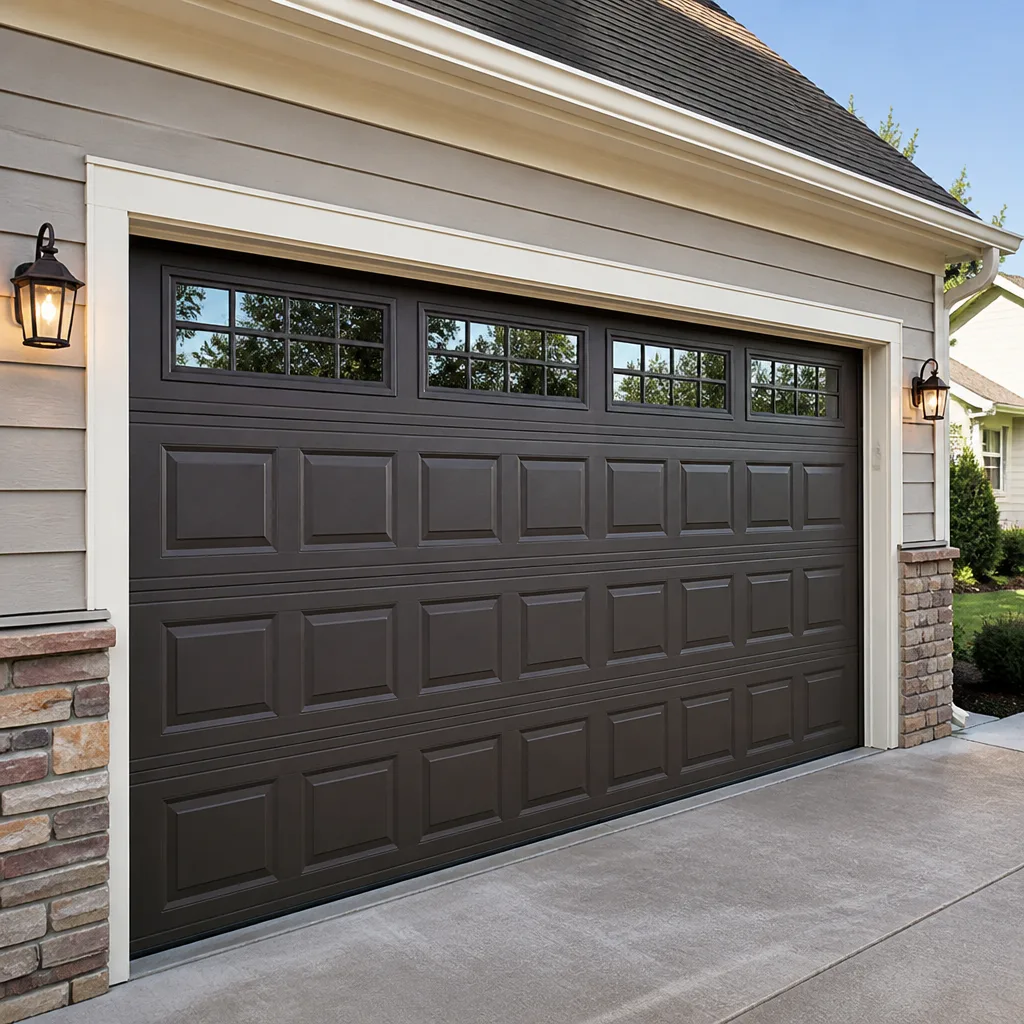 Raised-panel steel
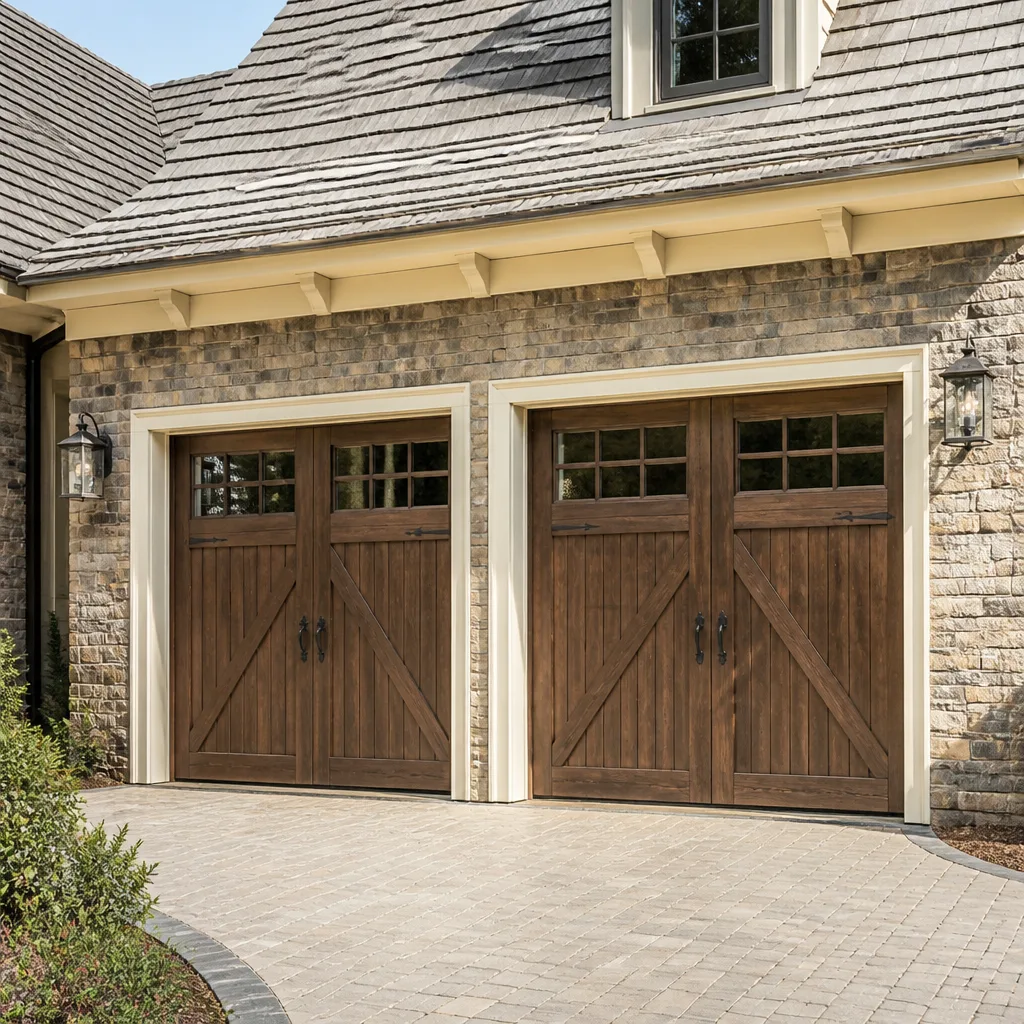 Carriage house
 Modern flush
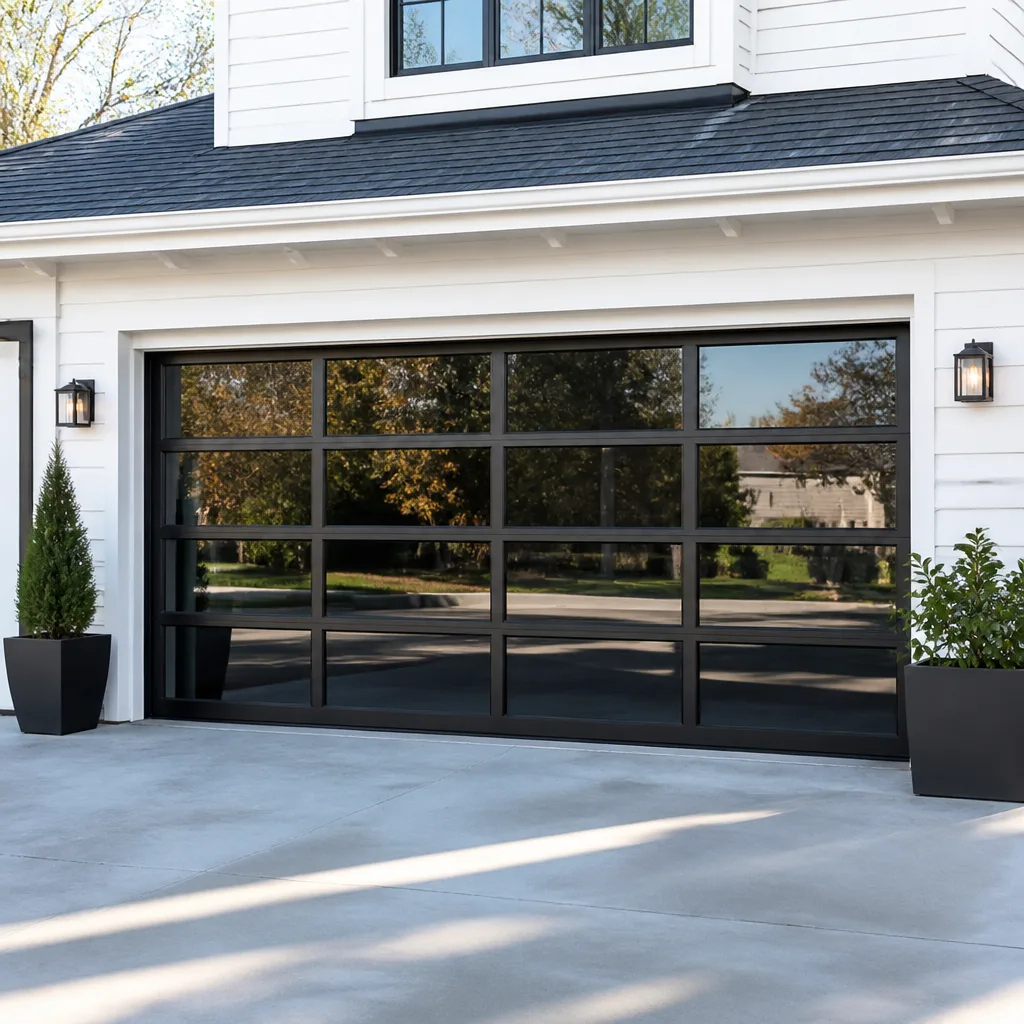 Full-view glass
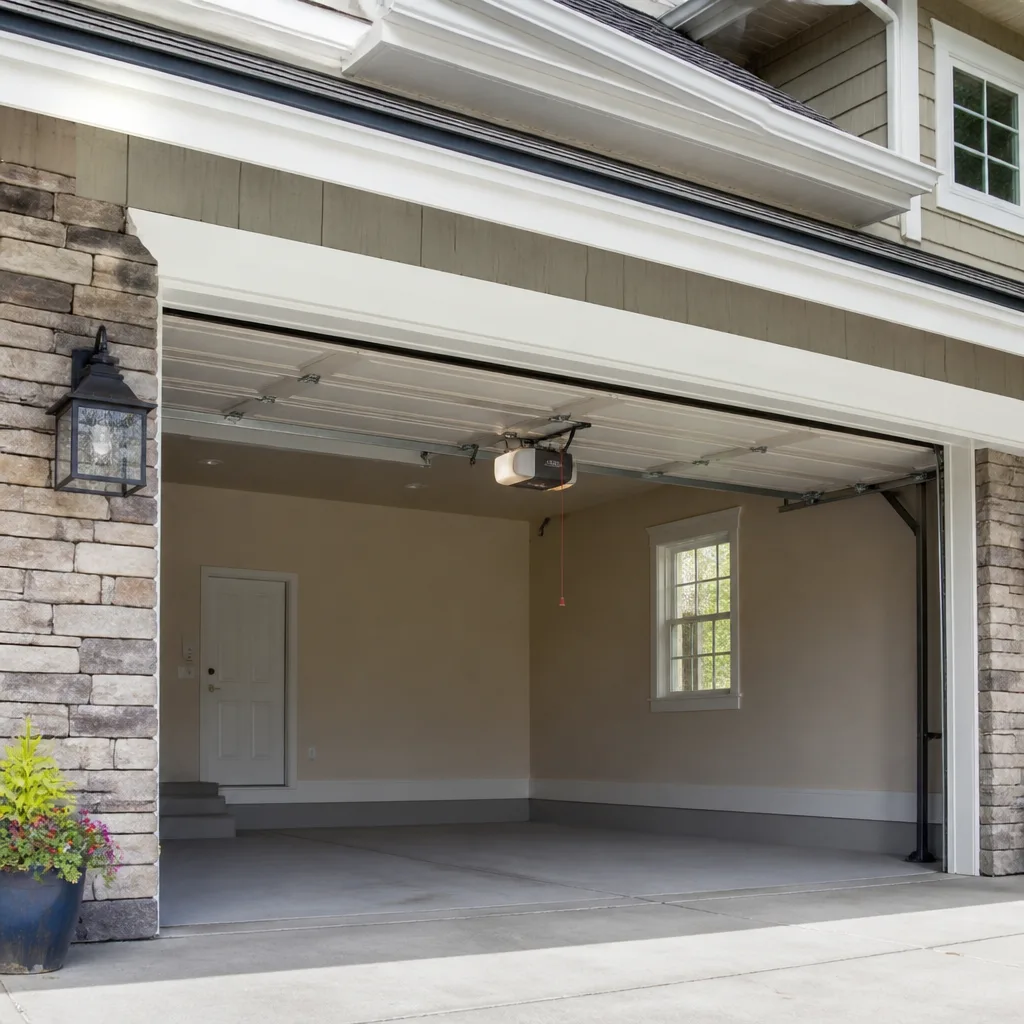 LiftMaster openers
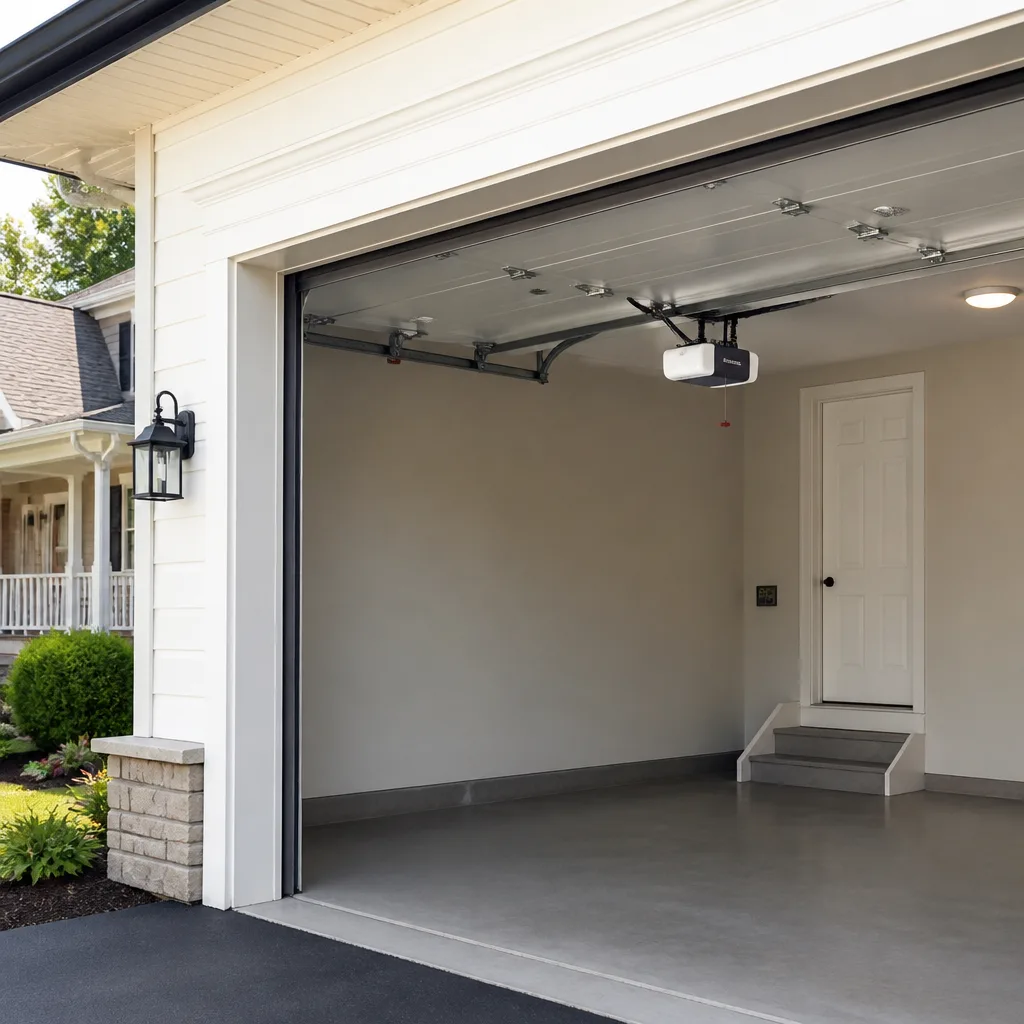 Chamberlain openers
Full 25-point door and opener safety check with every visit - springs, cables, rollers, tracks, and your LiftMaster or Chamberlain opener included
You get a price before we start. It does not change when the pro arrives.
Get your free estimateHow to Hire a Garage Door Contractor in Sugar Land: A Step-by-Step Guide
Most homeowners hire a garage door contractor the same way they’d hire a painter: get a couple of quotes, pick the middle one, hope for the best. That approach works fine for repainting a hallway. It works badly for a torsion spring wound to hundreds of foot-pounds of tension. The part that separates a good hire from a costly one in Sugar Land usually isn’t the estimate at the bottom of the page. It’s whether the person holding the wrench understands Texas licensing realities, carries current liability coverage, and can work on the branded system already bolted to your ceiling without voiding the manufacturer’s warranty. This guide walks you through verifying all three, plus the questions that reveal a technician who actually knows your equipment.
Quick Answer
To hire a garage door contractor in Sugar Land, verify state registration, request a current certificate of general liability insurance that covers property damage, confirm brand-specific experience with your existing system, and insist on a written scope of work with a workmanship guarantee before any tools come out. Texas does not issue a dedicated garage door contractor license, so registration, insurance and brand knowledge do the vetting a license would normally do elsewhere.
Styles & brands we work with
- Raised-panel steel
- Carriage house
- Modern flush
- Full-view glass
- LiftMaster openers
- Chamberlain openers
Table of Contents
- What Texas Actually Requires of Garage Door Contractors
- How to Verify Insurance and Registration Before You Book
- How to Tell If a Technician Knows Your Brand
- Getting a Written Scope of Work That Protects You
- Why Spring Work Is a Different Kind of Repair
- Storm-Season Red Flags in the Houston Metro
- The Questions to Ask Every Contractor
- What Sugar Land Homes Do to Garage Doors
What Texas Actually Requires of Garage Door Contractors
Texas doesn’t license garage door contractors the way it licenses electricians or plumbers. There’s no state-issued garage door license to check, and any contractor who claims to hold one deserves a follow-up question. What exists instead is a registration framework, general liability insurance, and whatever the local jurisdiction requires for the specific work. The Texas Department of Licensing and Regulation handles registration for certain trades, and a contractor should be able to tell you plainly which registration applies to their business and produce the number.
The distinction matters because “licensed and insured” gets thrown around loosely. In Texas it usually means the contractor is registered with the state where required, carries general liability coverage, and may carry workers’ compensation. It does not mean a state board examined and certified their garage door skills. That’s an important thing to understand before you hand anyone access to a system that carries enough stored energy to injure someone badly.
Permits are a separate layer. Most routine repairs don’t trigger one, but a full door replacement or structural work on the framing around the opening may. Sugar Land homeowners should call the city’s building department directly and ask what the current requirement is for the specific job in front of them. A contractor who shrugs at the question or tells you permits are never needed is telling you something about how they operate.
Here’s the practical takeaway for Sugar Land: you are vetting registration, insurance and competence, not a license number. That means asking direct questions and asking for documents. A professional operation expects it.
How to Verify Insurance and Registration Before You Book
A certificate of insurance is not a formality. It’s the document that determines who pays if a door panel comes off its track and lands on a car, or if a technician gets hurt on your property. Ask for the certificate and read it. Two coverage lines matter here.
- General liability: should list sufficient coverage for property damage, not just bodily injury. A door that falls and crushes a vehicle hood is a property-damage claim.
- Workers’ compensation: if the contractor employs technicians, this protects you from liability if someone is injured while working at your home.
The other verification step is simple, and most homeowners skip it: call the phone number on the certificate and confirm the policy is current. Certificates get issued and then canceled for non-payment. A current certificate dated for the right policy period is worth more than a scan of one from three years ago.
For registration, ask the contractor to state which state registration applies and provide the number. If they can’t answer clearly, that is your answer. Sugar Land has seen its share of operators who work out of a pickup with no paper trail at all.
One more check that costs nothing: ask for the business’s legal name and confirm it matches the certificate. A certificate issued to a different entity than the one invoicing you is a gap worth noting. If you’d rather skip the paperwork headache entirely, ask upfront. Reputable contractors expect these questions and carry the documents ready. You can reach our team at (833) 508-9229 to talk through what your job involves before anyone comes out.
How to Tell If a Technician Knows Your Brand
Here’s the question that separates real brand knowledge from improvisation: ask what model opener or door they think is installed on your home before they arrive, then ask how they’d confirm it. A technician who works on LiftMaster and Chamberlain regularly will know the myQ smart-home setup and how it’s configured. One who deals mostly in Genie will ask different questions. Someone who’s never touched a Raynor will look at a Raynor door like it’s a foreign object.
We work on the brand you already have, and that’s a deliberate choice. Most Sugar Land homes have one of a handful of systems installed: LiftMaster, Chamberlain, Genie, Clopay, Amarr, Wayne Dalton, Craftsman or Raynor. Knowing those systems means knowing which parts fit, which springs match the door’s weight, and how to service the opener without voiding a warranty. That last point is the one homeowners miss. An incorrect part or an improper adjustment can invalidate a manufacturer warranty that still has years left on it.
Try these questions before you book:
- “What brand of opener do you think is on my door, and what would make you switch your answer?”
- “Do you use universal replacement parts, or parts matched to the manufacturer’s spec?”
- “If the repair affects my warranty, how do you handle it?”
- “How do you confirm the spring tension is rated correctly for my door’s weight?”
- “What’s your process for testing balance and travel after the repair?”
A technician who answers all five without hesitation knows the trade. One who stumbles on the spring-weight question especially is winging it. Stored-energy springs have to match the door’s weight and the cycles you expect from them, and that’s not something you eyeball. For more on how our team thinks through these repairs, see our page on garage door repair.
Getting a Written Scope of Work That Protects You
A verbal quote is a conversation. A written scope of work is a contract, and it’s the only thing standing between you and a surprise invoice. The document should state exactly what will be replaced, what parts will be used, what the price includes, and what happens if the repair fails within a defined window. Ask for 90 days as a workmanship guarantee floor, and get it in writing.
Here’s what a proper scope for a typical garage door job should contain:
- The specific parts to be replaced (springs by type and rating, opener model, rollers, cables)
- Whether the price is for one spring or a matched pair
- The labor included and any work that’s excluded
- The total price and a statement that the quote is the price
- A workmanship guarantee period spelled out in days
- A statement of what happens if the repair fails inside that window
The matched-pair point matters because it’s where quotes get murky. If one spring has failed on a two-spring system, replacing only the broken one often means the second fails within months because it has been carrying the load alone. A contractor should tell you plainly whether the price covers one spring or both. We quote spring work per spring because a pair costs about twice a single-spring job, and hiding that behind a vague line is how invoices balloon.
This written scope habit also protects you in the event the repair fails. With a documented job and a stated guarantee, you have a path to have it fixed correctly. Without one, you’re relying on goodwill. For a deeper look at what spring replacement involves, our garage door spring repair page walks through the process.
Why Spring Work Is a Different Kind of Repair
Torsion and extension springs store the mechanical energy that lifts your door. A torsion spring on a standard residential door can carry hundreds of pounds of force. When it lets go under load, it releases that force. This is the single most dangerous repair in the trade, and it’s the one homeowners most often attempt to DIY. We don’t give you step-by-step instructions for it, and neither should anyone else.
What you can do is recognize when a spring is near the end of its life or already failing, and call someone trained. Signs worth noting:
- A loud bang from the garage, followed by a door that won’t lift
- A visible gap in one of the springs above the door
- The door feels unusually heavy when you lift it by hand (with the opener disengaged)
- Visible stretch or sag in the spring coil
- The door rises a few inches and stops
If any of those show up, treat it as a call-someone situation. A trained technician will match the replacement spring to the door’s weight, set the tension correctly, and balance and test the door afterward. Skip the DIY video. The risk isn’t a botched repair; it’s a hospital visit. When spring work is done right, it’s quick and uneventful. That’s the goal.
Storm-Season Red Flags in the Houston Metro
After a major storm moves through the Houston metro, contractors from outside the area show up in Sugar Land and the surrounding suburbs. Some are reputable. Some are riding a surge and will be gone in two weeks. The tell is almost always how they sell. Urgency plus a same-day discount is the classic combination, and it’s worth recognizing before you sign anything.
Specific patterns to watch for:
- High-pressure upgrades: a routine spring or opener job suddenly becomes an argument for a full door replacement you didn’t ask about.
- Time pressure: “The price goes up tomorrow” or “I can fit you in today if you decide right now.”
- No written quote: a verbal number that changes once the work begins.
- No local address or business name on the truck: you can’t confirm who you’re dealing with.
- Refusal to discuss warranty or workmanship guarantees: a technician who won’t commit in writing won’t stand behind the job.
- No insurance document available: “we’re covered” is not a certificate.
None of this means storm-season contractors are all bad. It means the surge environment attracts people who cut corners. Slow down, ask for the paperwork, and read the scope before anyone starts. If a contractor can’t wait for you to read a one-page scope, that’s information.
The Questions to Ask Every Contractor
Ask these in a single call. The answers tell you most of what you need to know, and a professional operation will have answers without getting defensive. Numbered for the extraction-friendly format:
- Are you registered with the state where required, and what’s your registration number?
- Can you send me a current certificate of general liability insurance that covers property damage?
- Which brands are your technicians trained on, and is my system one of them?
- Do you charge separately for the estimate, and is that fee credited if I book?
- Will the price you quote be the price I pay, in writing?
- What’s your workmanship guarantee, and what exactly does it cover?
- If the repair fails within 90 days, what’s the process to get it fixed?
- Does your quote cover one spring or both if the system has two?
Question four is a good filter. Estimates should be free, and the price should be set per job by the written quote. If a contractor quotes a service-call or diagnostic fee, write it down and factor it into the comparison. Reputable operators in Sugar Land will give you a written price before any work begins, and that price stands.
Question eight is the one that saves homeowners the most. A hidden spring-pair charge is a common source of sticker shock after the fact. Get it answered clearly, in writing, before the truck pulls up on your street.
What Sugar Land Homes Do to Garage Doors
Sugar Land’s climate is hard on the moving parts of a garage door, though not in the way you might expect. Winters are mild here, so freeze and thaw don’t chew up the springs the way they do further north. The homeowner’s real enemy is heat and humidity. Long summers with high humidity accelerate wear on lubricated moving parts, encourage rust on steel components, and put extra stress on the opener’s motor and drive. A door that gets frequent use needs more than a once-a-decade tune-up.
Housing stock matters too. Sugar Land’s mix of older homes and newer construction means some doors are original to the house and some have been replaced. A fourteen-year-old spring on an older door is at the point where failure is likely, and a technician who knows the cycles will tell you. The newer subdivisions on the south side often run LiftMaster and Chamberlain openers with myQ smart-home integration, and servicing those requires familiarity with the connected-home setup, not just the mechanical parts.
Practical guidance for Sugar Land homeowners:
- Lubricate hinges, rollers and springs periodically with a garage-door-specific lubricant.
- Test the auto-reverse safety feature monthly by placing a small object under the door’s path.
- Listen for new noises. Grinding, popping or squealing means something needs attention.
- Schedule a tune-up if the door gets heavy daily use, especially if it has been years since a service.
- Know your opener’s model so you can describe it clearly when you call.
None of these replace a trained eye on a spring, but they’ll catch problems before they strand you. When opener behavior changes, a call to a technician who knows your brand is a better use of time than trying to troubleshoot from a video. Our garage door opener repair page breaks down what’s involved for the common systems.
Common Mistakes to Avoid
- Choosing the middle quote without checking paperwork. The cheapest and the middle quote can look identical on paper while only one carries current insurance and offers a written guarantee. Verify the documents first, then compare price.
- Accepting “licensed and insured” as a fact. Texas doesn’t issue a dedicated garage door contractor license, so the phrasing is a shortcut. Ask for the registration number and the certificate, and confirm the certificate is current.
- Letting a warranty lapse by using the wrong part. If a technician swaps in a universal spring or opener part that doesn’t match your manufacturer’s spec, the factory warranty can be voided. Ask how the repair affects it, in writing.
- Not asking whether the price covers one spring or two. Matched pairs usually get replaced together, and a pair costs about twice a single-spring job. That distinction needs to be in the written quote, not discovered later.
- Taking a verbal quote during storm season. Surges in the Houston metro bring contractors who work fast and vanish. If the quote isn’t written and the scope isn’t clear, don’t book.
- Attempting a spring replacement yourself. It’s the most dangerous repair in the trade, and a YouTube tutorial can’t teach the tensioning or the weight-matching the job requires.
- Skipping the safety test after any repair. A door that closes is not the same as a door that reverses on contact. Confirm the auto-reverse works before considering the job done.
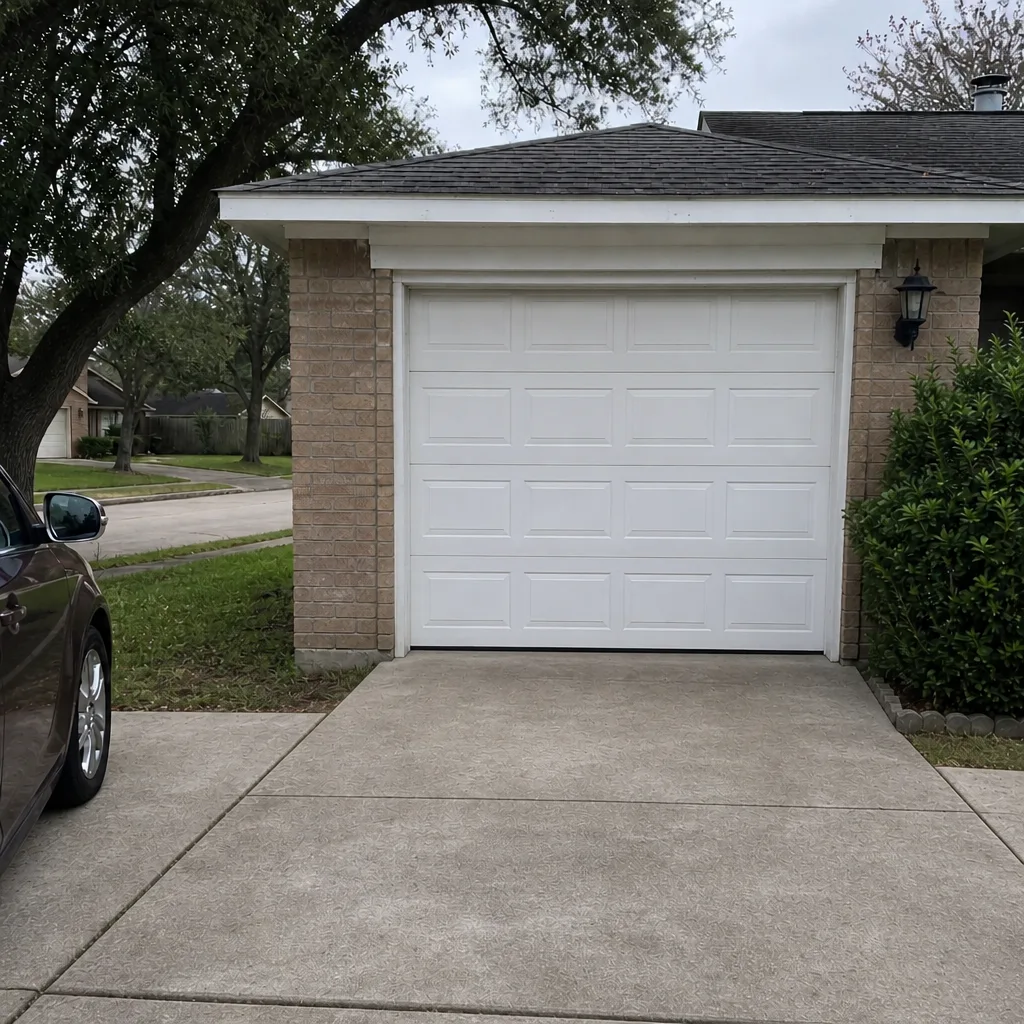
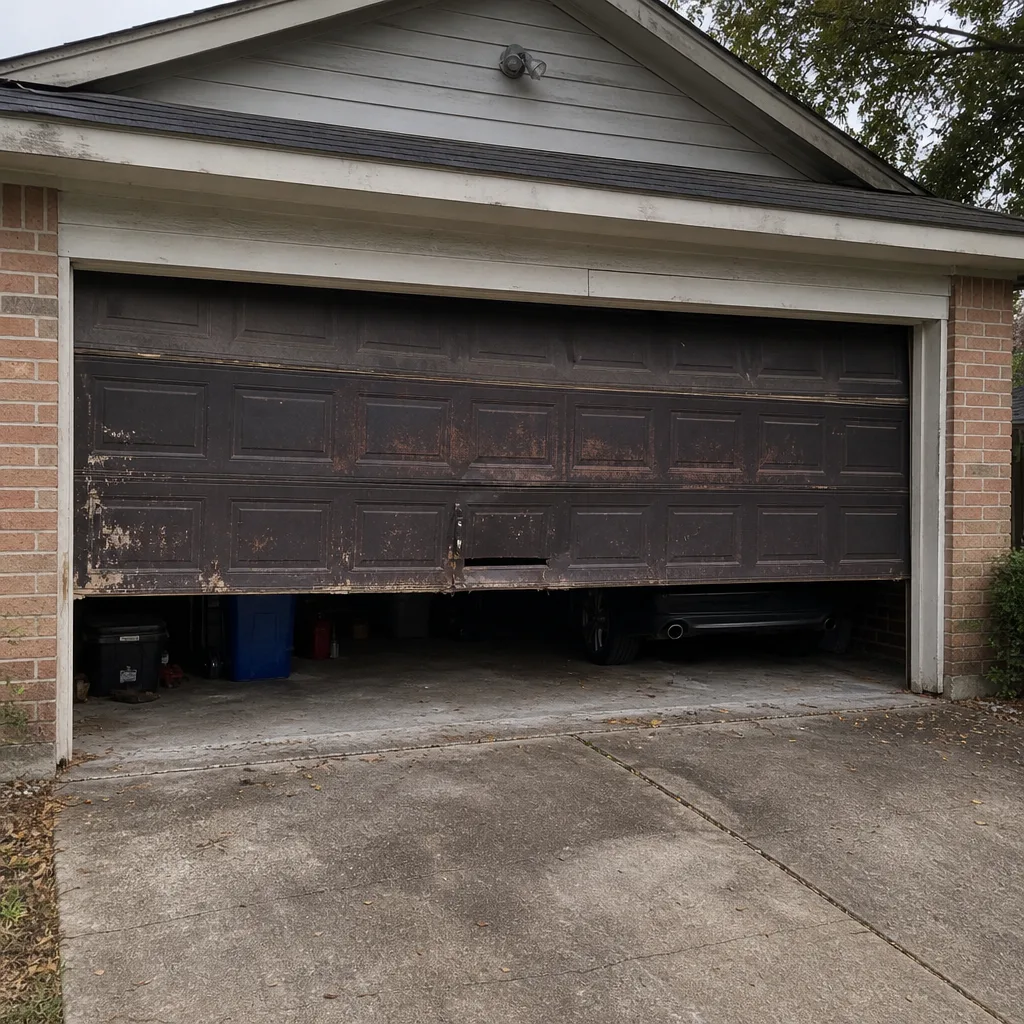
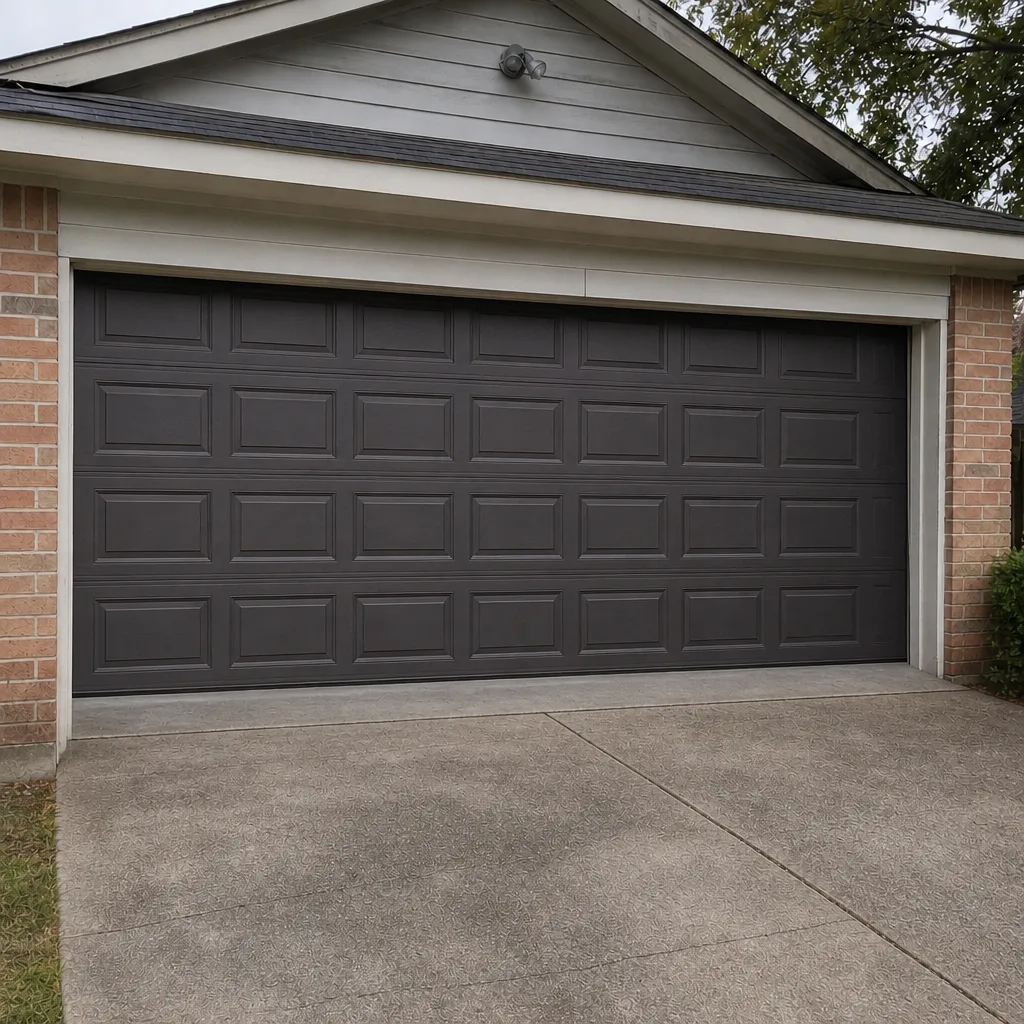
See the difference
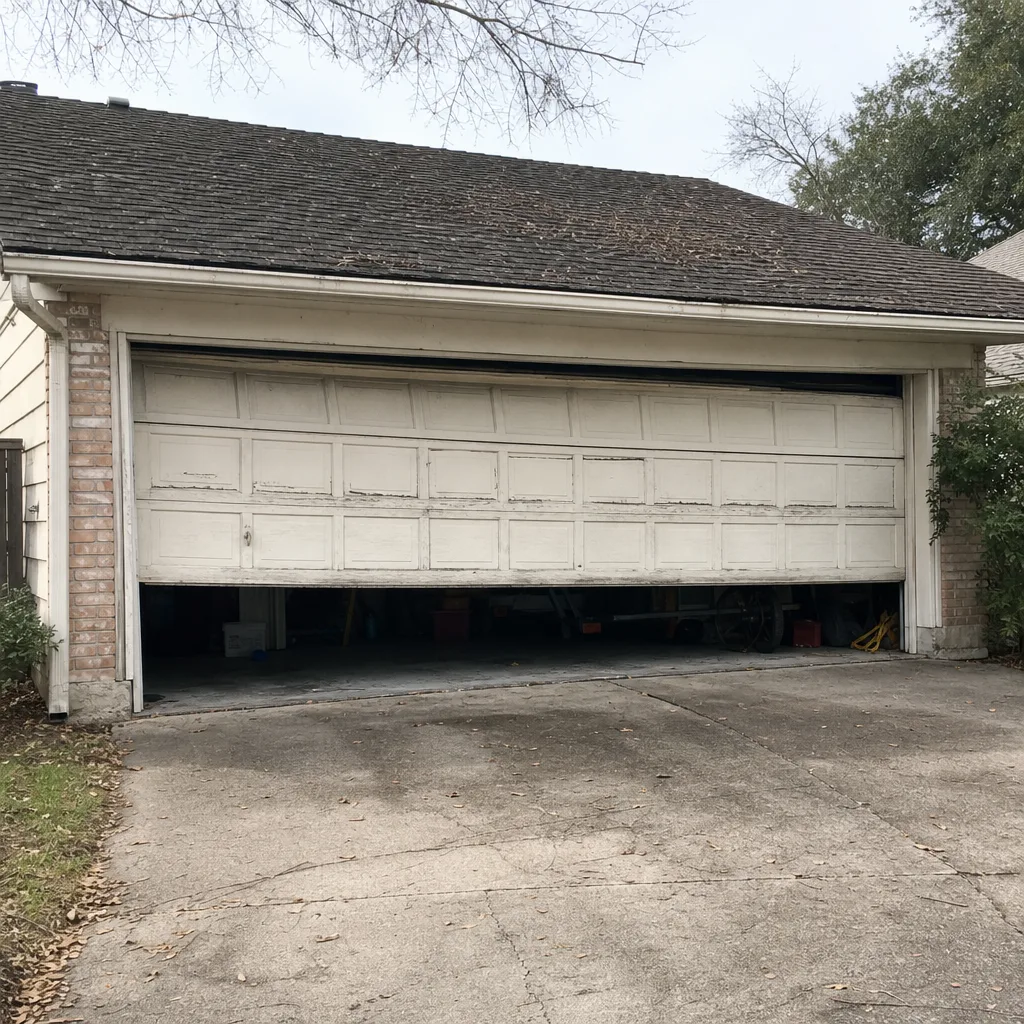 Before
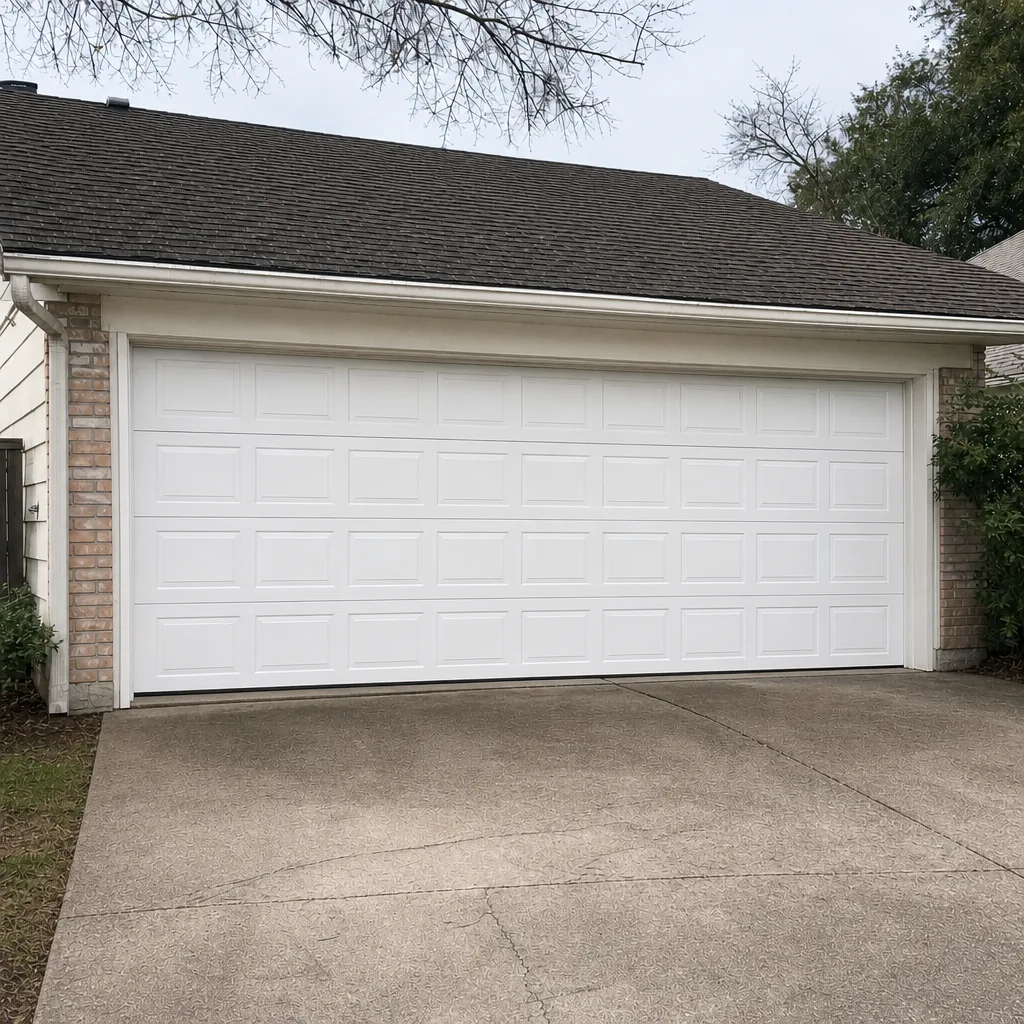 After
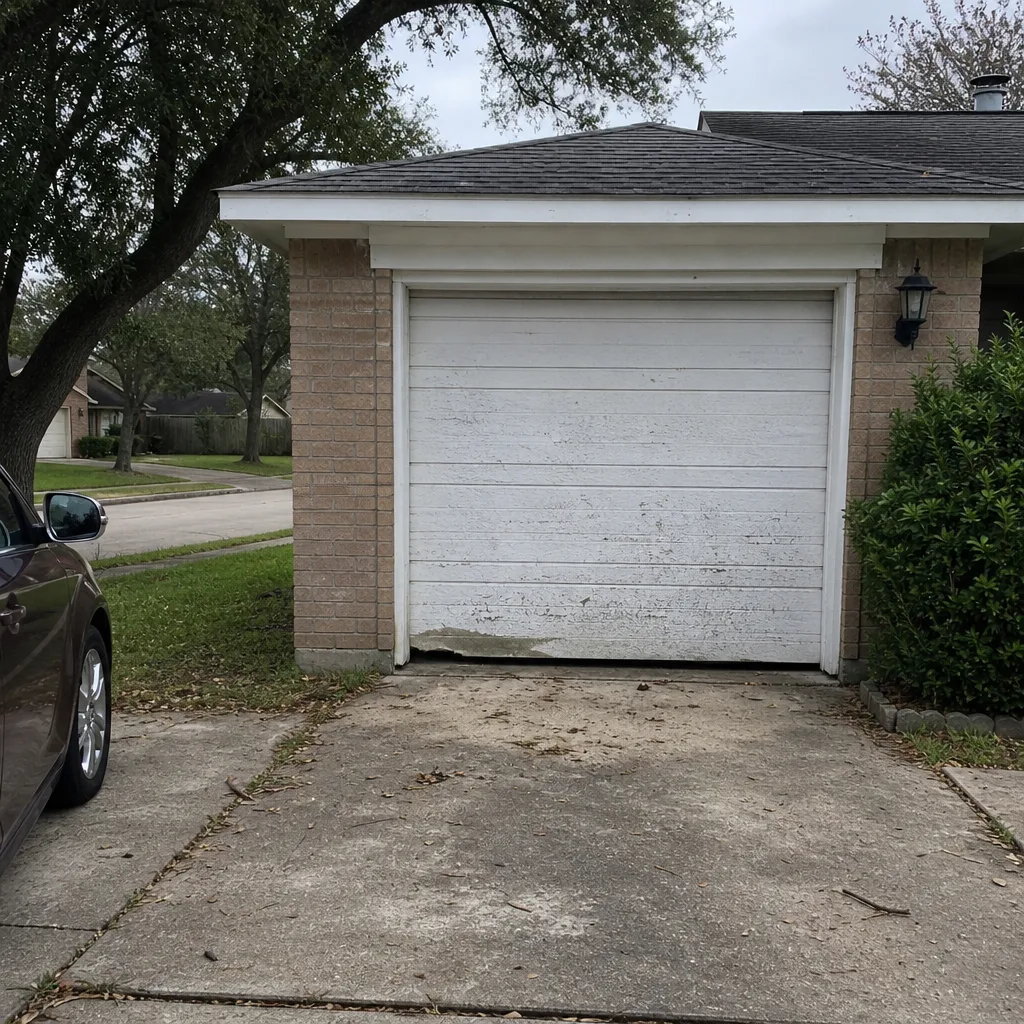 Before
 After
 Before
 After
When to Call a Professional
Some garage door issues are safe to watch and assess. Others aren’t. Call a professional when the spring has visibly broken, when the door won’t lift, when the opener strains or reverses for no apparent reason, when the door is off its track, or when it makes grinding or popping sounds during operation. Also call if the door has become your home’s main entry point and any part of the system is failing; a door that won’t close leaves your home unsecured. These are the situations where a trained technician can diagnose quickly and correct the problem correctly. If the door is jammed or failing outside normal hours, we answer 24/7. Sugar Land Garage Door Repair Pros offers free estimates in Sugar Land, so call (833) 508-9229 to talk through your situation. Fast dispatch from 7am to 7pm, Sunday through Friday.
Frequently Asked Questions
Typical garage door repairs in the Sugar Land area run from a modest cost for a tune-up or a roller replacement up to a larger figure for spring work on a matched pair. The exact price depends on the parts needed and the system’s condition, so the useful step is to get a free estimate with the scope in writing. Call (833) 508-9229 for an exact quote. Estimates are free.
Texas doesn’t issue a dedicated garage door contractor license, so you should verify state registration where required, a current certificate of general liability insurance, and brand-specific experience. Ask for the registration number and the insurance certificate, and call the number on the certificate to confirm the policy is current. A contractor who answers clearly is worth taking seriously.
The written estimate is the price. We quote per job before any work starts, and the scope makes clear what’s included and what’s excluded. If something unexpected turns up, we stop and talk to you before proceeding, so you’re never facing a surprise invoice. Call (833) 508-9229 to book a free estimate.
Same-day service is available depending on schedule and the nature of the repair. Emergency garage door service is one of our core offerings, and we treat it as a genuine commitment, not a marketing line. We answer 24/7 and dispatch from 7am to 7pm, Sunday through Friday. Call (833) 508-9229 and we’ll get you on the schedule.
Our technicians are trained on eight major brands: LiftMaster, Chamberlain, Genie, Clopay, Amarr, Wayne Dalton, Craftsman and Raynor. That covers the vast majority of systems in Sugar Land homes. If you’re unsure what’s installed, tell us what the door looks like and any branding on the opener, and we’ll help identify it.
The written scope of work should state the workmanship guarantee in days and describe what happens if the repair fails inside that window. Ask for 90 days as a floor. A professional contractor will commit to a guarantee in writing; if they won’t, that’s a reason to keep looking. Call (833) 508-9229 to discuss the guarantee on your specific job.
The Bottom Line
Hiring a garage door contractor in Sugar Land comes down to four checks: verify registration and current insurance, confirm brand-specific experience with your system, get a written scope of work with a stated workmanship guarantee, and make sure spring prices cover the right number of springs. Texas doesn’t license garage door specialists, so those four steps do the vetting. The result is a repair that’s done correctly the first time, without the invoice surprises and warranty complications that follow a bad hire. Our team at Sugar Land Garage Door Repair Pros is here to help when the door needs attention. Call (833) 508-9229 for a free estimate.
Written by the team at Sugar Land Garage Door Repair Pros.