
Last updated November 21, 2026
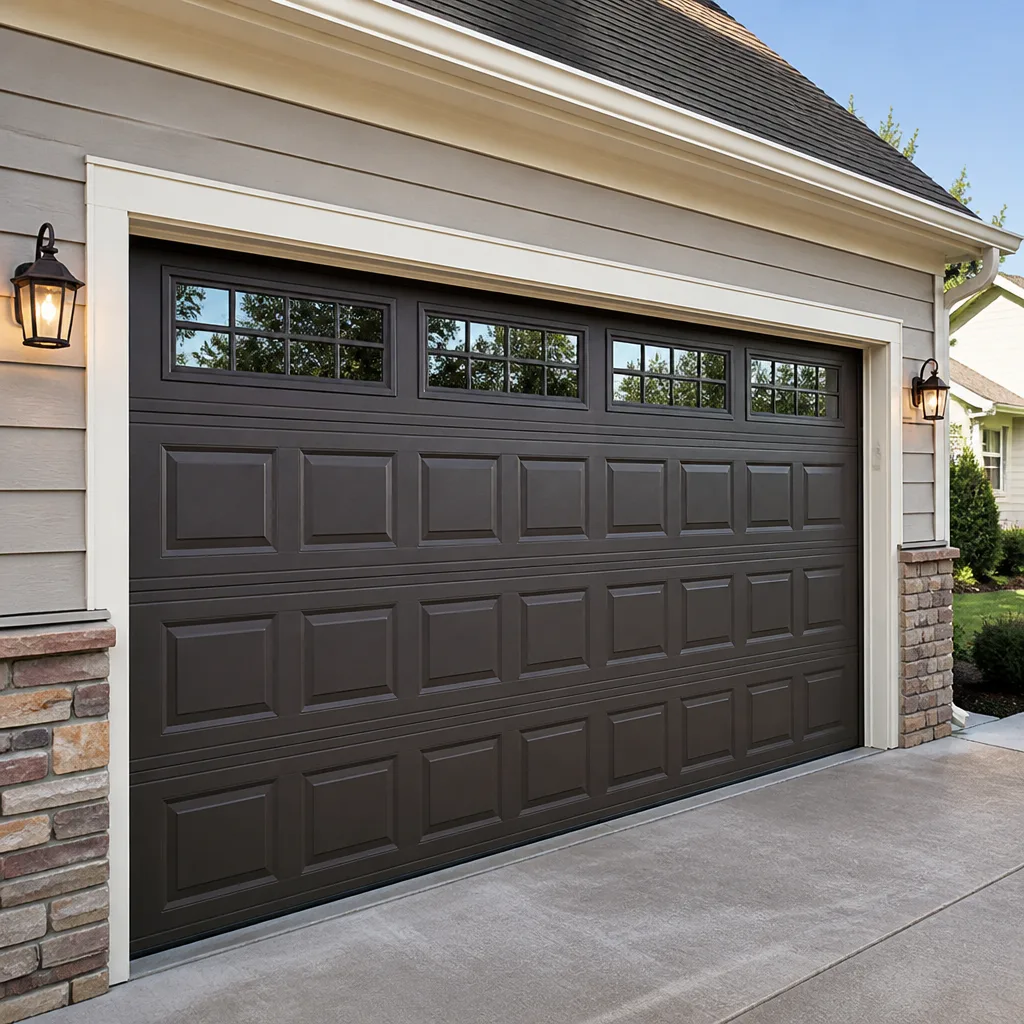 Raised-panel steel
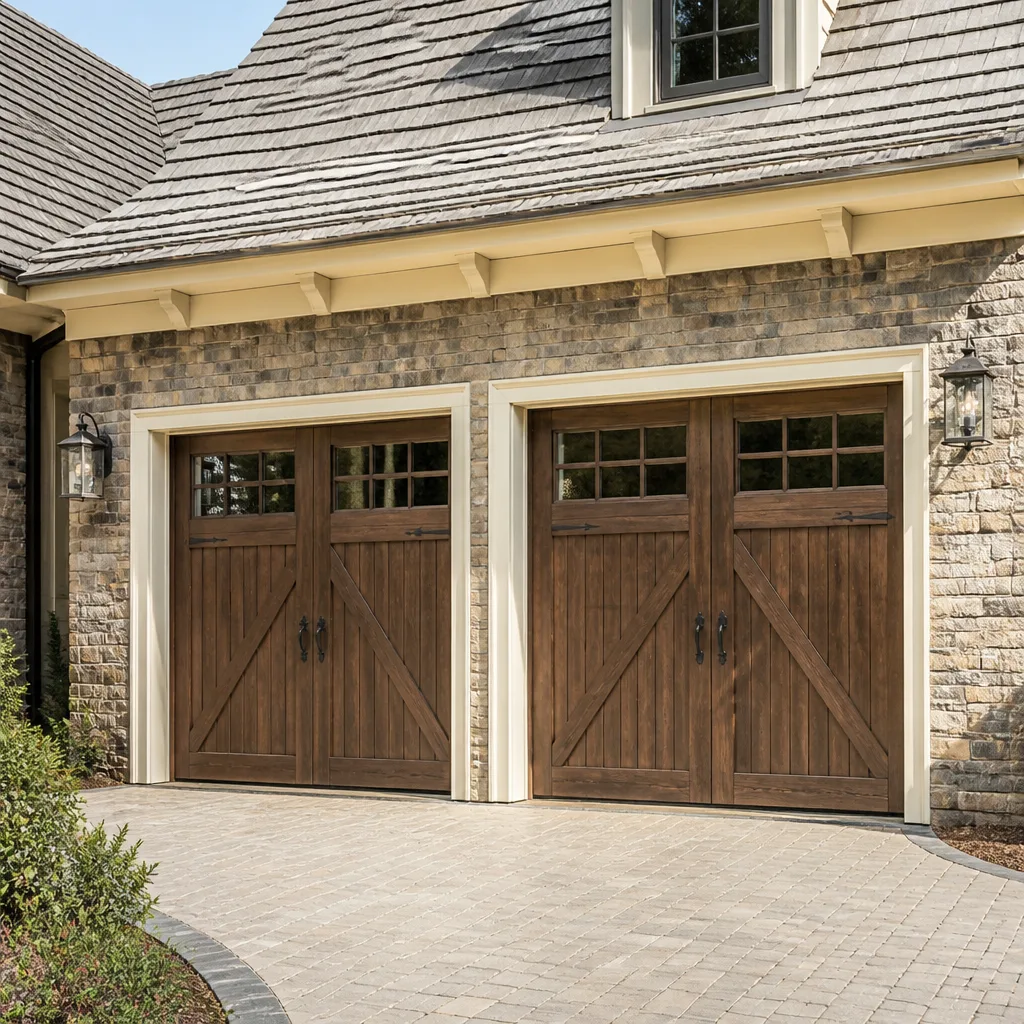 Carriage house
 Modern flush
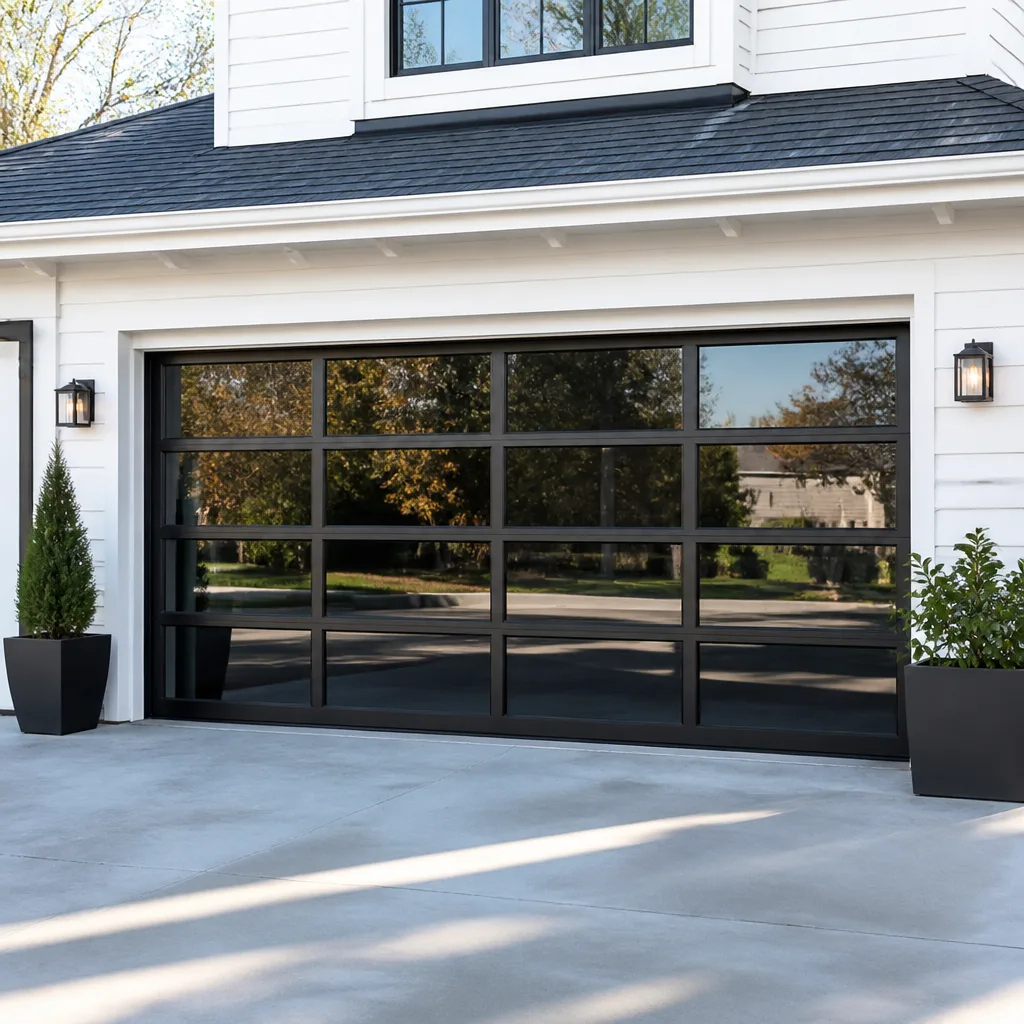 Full-view glass
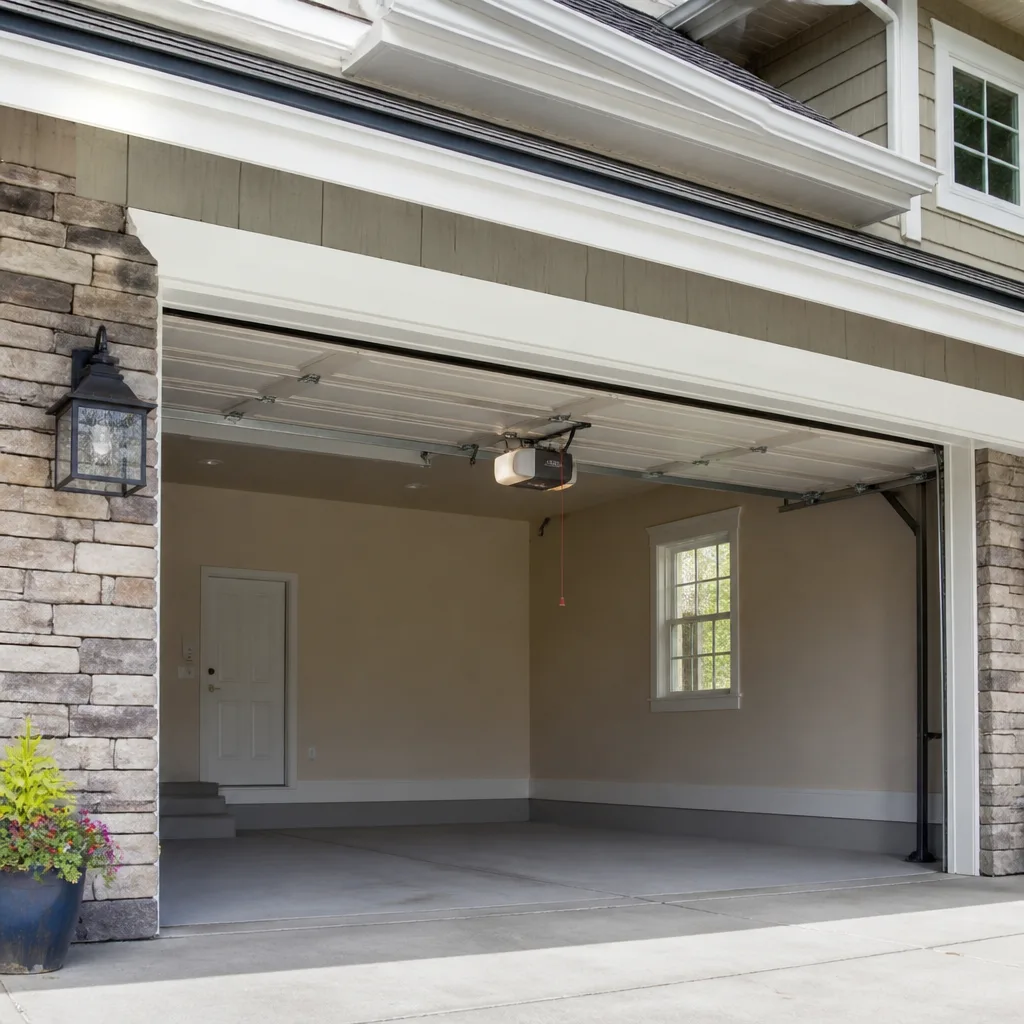 LiftMaster openers
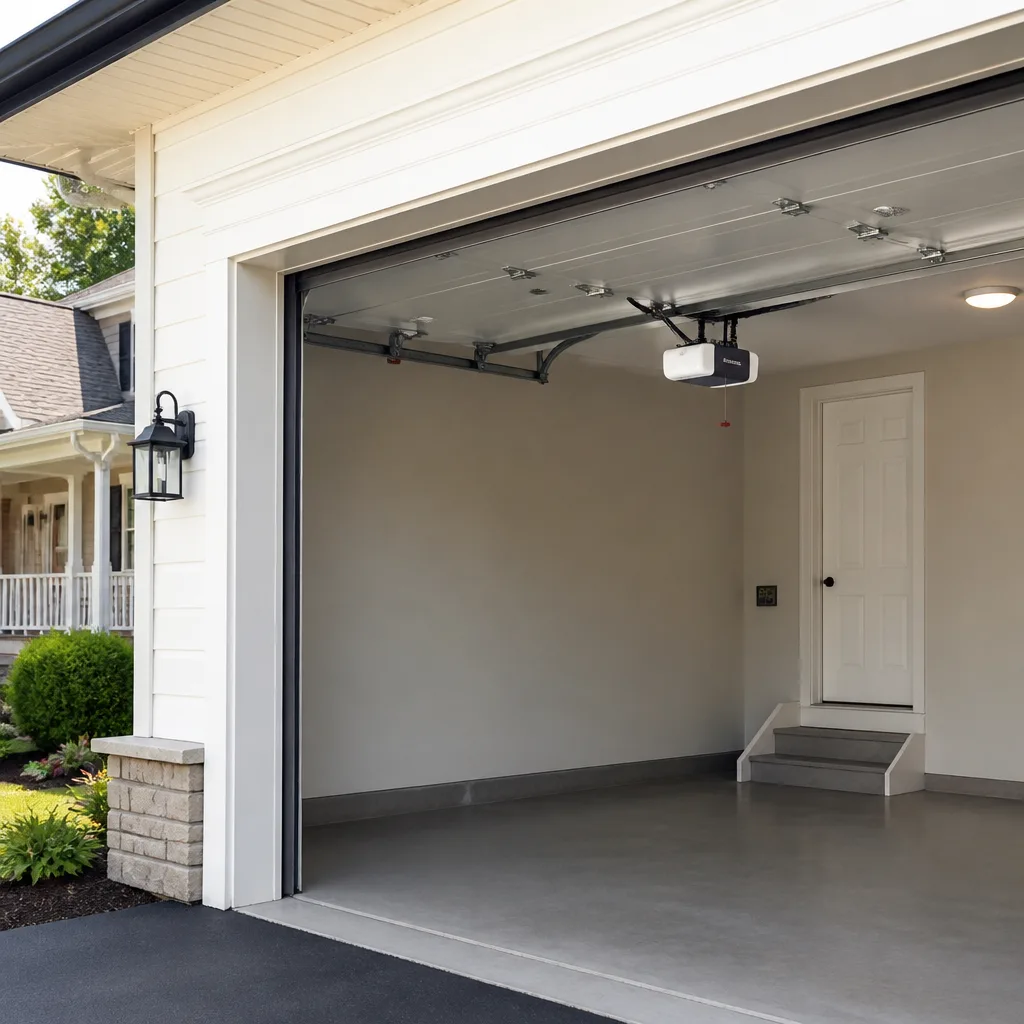 Chamberlain openers
Full 25-point door and opener safety check with every visit - springs, cables, rollers, tracks, and your LiftMaster or Chamberlain opener included
You get a price before we start. It does not change when the pro arrives.
Get your free estimateGarage Door Permits, Codes & Inspections in Sugar Land, TX: What You Need to Know
Here’s the part most Sugar Land homeowners miss: permits aren’t only about new construction. A full garage door replacement is a structural change to the largest opening on your home, and it typically triggers a permit requirement under City of Sugar Land and Fort Bend County building rules. Repairs usually don’t. Swapping a door does. If you’re selling your Sugar Land home and the door was replaced without a permit in the last five years, your buyer’s inspector may flag it, and retrofitting an inspection after the fact costs more than pulling the permit upfront ever would have. This guide walks through which jobs need a permit, how the wind-load code applies here, how to pull one yourself versus letting a contractor handle it, and what a final inspection actually checks.
Quick Answer
A full garage door replacement in Sugar Land typically requires a permit, while routine repairs like spring swaps or opener fixes generally don’t. The line depends on whether you’re changing the structure of the opening or just restoring it. Wind-load rated doors in this area must meet IRC requirements plus local Fort Bend County amendments. If you’re not sure which side of that line your job falls on, a free estimate from a qualified technician will tell you before any work starts.
Styles & brands we work with
- Raised-panel steel
- Carriage house
- Modern flush
- Full-view glass
- LiftMaster openers
- Chamberlain openers
Table of Contents
- Which Garage Door Jobs Need a Permit in Sugar Land?
- City Limits vs. Unincorporated Fort Bend County: Where’s the Line?
- Wind-Load Ratings and the Codes That Apply to Sugar Land Doors
- Pulling the Permit Yourself vs. Having the Contractor Do It
- What a Final Inspection Actually Checks
- How Unpermitted Work Affects Insurance Claims
- The Resale Problem: Permits, Inspectors, and Disclosures
- Common Mistakes to Avoid
Which Garage Door Jobs Need a Permit in Sugar Land?
A permit is usually required when you replace the entire door assembly, change the door size or opening, alter the header or track framing, or install a new door with a different wind-load rating than the original. Repairs to springs, cables, rollers, hinges, opener motors, and sensors typically don’t require a permit because you’re restoring the existing system rather than changing its structure. The dividing line is whether the work changes the physical opening or the door’s structural performance.
Here’s how we usually frame it for homeowners:
- Full door replacement – almost always permit required
- Changing door dimensions or opening height – permit required
- Replacing damaged framing or the header above the door – permit required
- Upgrading to a higher wind-load rated door – permit required, and you’ll need documentation
- Spring replacement (torsion or extension) – no permit, but technician-only work
- Opener replacement or repair – no permit
- Panel replacement on an existing door of the same rating – depends on scope; check with the city building department
What surprises people in Sugar Land is how fast the rules shift depending on where you live. Homes inside the city limits sit under City of Sugar Land permitting, while a house a mile west in unincorporated Fort Bend County follows county rules. Those two jurisdictions don’t always line up on the small details. Before you assume your job is permit-free, call Sugar Land’s building department or your county office and describe exactly what’s changing. It’s a five-minute call that saves a lot of grief later.
We see the confusion most often in Riverstone, Greatwood, and First Colony homes where original builder-grade doors from the 1990s and early 2000s are hitting the end of their lifespan. Sometimes a full replacement is the right move, sometimes repair is. For repair-only jobs, see our garage door repair service. When replacement is the answer, the permit starts the process, not ends it.
City Limits vs. Unincorporated Fort Bend County: Where’s the Line?
The permit boundary in Sugar Land doesn’t follow the freeway or the subdivision sign. It follows the official city limit line, which has moved and changed multiple times as Sugar Land has grown. Some neighborhoods that feel suburban-Sugar-Land are actually in unincorporated Fort Bend County, and a few areas people think of as “out near Fulshear” are inside Sugar Land proper. That matters because the permit process, the inspection timing, and the paper trail you need at resale differ between the two.
To figure out which side you’re on:
- Look up your address on the Fort Bend Central Appraisal District (FCAD) site, which shows the taxing jurisdiction.
- Check the City of Sugar Land’s online GIS or call the city’s building department with your address.
- Ask your HOA. Many Sugar Land subdivisions like Telfair or Riverstone track which jurisdiction issued their permits and can tell you quickly.
- If you’re still not sure, ask the contractor pulling the permit to confirm in writing.
The practical difference comes down to who inspects what and when. City of Sugar Land permits go through the city’s building department. Unincorporated Fort Bend County jobs go through the county. Both want to see wind-load compliance. Both want the final inspection signed off. But the paperwork path isn’t identical, and if a contractor hands you a county permit for a home that’s actually inside city limits, the inspection will fail and you’ll be the one redoing it.
We’ve seen this trip up homeowners in the Sienna area, where the city-county boundary threads through the neighborhoods. If a permit was pulled for the wrong jurisdiction, the door may be installed perfectly and still fail as unpermitted work when the house sells. It’s not a small thing.
Wind-Load Ratings and the Codes That Apply to Sugar Land Doors
Sugar Land sits in a wind zone where garage doors aren’t just panels and springs, they’re part of the home’s wind-resistance envelope. The International Residential Code (IRC) requires garage doors in this region to be rated for the design wind speed of the location, and Fort Bend County has adopted local amendments that tighten those requirements further in some cases. In plain terms: a garage door that would be fine in a calm inland climate may not meet code here.
What that means when you’re replacing a door:
- The new door must carry a wind-load rating appropriate for your address, usually documented by the manufacturer.
- The rating label matters. A Clopay or Amarr door with the right rating will have documentation that satisfies the inspector. A door sold without one will not.
- Reinforcement matters too. Even a rated door needs proper bracket placement, track anchoring, and header attachment to perform as rated.
- The opener doesn’t affect wind rating, but a LiftMaster or Chamberlain opener paired with a properly rated door brings the whole system up to spec.
Here’s the part homeowners rarely hear: a door can look completely fine and still fail a wind-load inspection. The panels can be rated, the install can look clean, and the door can still fail because the brackets were anchored into drywall instead of framing, or the header clearance doesn’t match the door’s engineering. This is where the code details matter more than the visual.
If you’re replacing a door and want to know the correct rating before you shop, ask your contractor or the city building department to confirm the design wind speed for your address. Every house has one. Every rated door needs to meet it.
Pulling the Permit Yourself vs. Having the Contractor Do It
Both paths are legal, but only one protects you the same way. When the contractor pulls the permit, their name is on the paperwork as the responsible party, and their license, insurance, and workmanship are on the line through the inspection. When you pull it as a homeowner, you’re the applicant of record. If the inspection fails or something is installed wrong, you’re the one on the hook, not the contractor who did the work.
For a homeowner, the contractor-pulled permit is the safer choice for three reasons:
- Liability stays with the contractor. If an inspector flags bracket placement, the contractor has to fix it, not you.
- Paper trail. The permit listing is tied to the contractor’s business, which is what a buyer’s agent will see at resale.
- Insurance. If the door fails during a storm and there’s a claim, the permit record backs up who did the work and to what standard.
There’s a common misconception that pulling the permit yourself saves money. It doesn’t, if the job is done properly. Permit fees don’t change based on who applies, and the only real savings scenario is when someone skips the permit entirely, which is exactly what causes problems later. As a homeowner you can pull the permit, but you’re essentially vouching for work you didn’t perform.
When we quote a replacement in Sugar Land, we pull the permit as part of the job and provide the homeowner with copies of everything. That’s the norm in this market, and it’s what a buyer’s inspector expects to see. We also make sure the door itself meets the wind-load rating the permit requires, which for brands like Clopay and Amarr means matching the door spec to the address, not just picking a color.
If you’re replacing a spring or opener instead, none of this applies. Spring work is dangerous, though, and we handle it with the safety rigor it needs. You can read more in our garage door spring repair guide.
What a Final Inspection Actually Checks
A final inspection is more detailed than most homeowners expect. It’s not a quick glance and a signature. Inspectors check the door against the permit, the permit against the code, and the install against the manufacturer’s specifications. A door that “looks fine” can fail on something as small as how the brackets are anchored.
Here’s what a final inspection typically looks at:
- Wind-load rating documentation – the door matches the permit and the address design wind speed
- Bracket and anchor placement – brackets anchored into structural framing, not just drywall or sheathing
- Track alignment and anchoring – the vertical track must be plumb, properly anchored, and secure
- Header and jamb clearance – the door’s engineering requires exact clearance; too much or too little fails
- Panel attachment – hinges and rollers installed per the manufacturer’s spec
- Opener mounting and safety reverse – if a new opener is part of the job, the safety reverse must work
- Label placement – the wind-load label must be visible and match the permit documentation
In our experience with Sugar Land inspections, the two most common failures are bracket placement and header clearance. Bracket placement fails when the installer used drywall anchors or missed the stud. Header clearance fails when the door was ordered at one size and installed in an opening spec’d for another. Neither is visible to the homeowner looking at the finished door. Both fail the inspection.
This is why we photograph the install and keep the manufacturer’s documentation on file. If an inspector has a question, we can answer it with the paperwork, not a promise. The door either meets the spec or it doesn’t.
How Unpermitted Work Affects Insurance Claims
If a garage door fails during a storm and the door was replaced without a permit, the insurance process gets complicated fast. Most homeowner policies cover storm damage to the structure, but they also reserve the right to ask whether the door was installed to the code standard for the address. A permitted install with the wind-load rating documented is straightforward. An unpermitted install leaves the claim open to dispute.
What that looks like in practice:
- The adjuster will ask for the permit record and the door’s wind-load documentation
- Without a permit, the adjuster may request an inspection to determine code compliance after the fact
- If the door doesn’t meet the current code standard, the claim may be reduced or denied on that component
- If the door was fine but the install wasn’t, the claim may still be complicated even though the storm was clearly the cause
The permit is the paper trail that answers all of these questions before they’re asked. In a wind zone like Sugar Land’s, that paper trail is not a bureaucratic nicety. It’s the difference between a clean claim and a fight.
We can work with your insurer if a claim is involved, but the best protection is having the permit issued and closed at install time. If you’re replacing a door and the contractor offers to “skip the permit” to save time, that’s the exact moment to walk. The job will cost more later.
The Resale Problem: Permits, Inspectors, and Disclosures
Sugar Land’s housing market moves, and buyers here are thorough. A buyer’s home inspector will check the garage door like everything else, and if they don’t find a permit record for a recent replacement, they’ll flag it. More to the point, Texas seller’s disclosures ask about unpermitted work. If you replaced a door without a permit and didn’t disclose it, you’re exposed after closing. If you did disclose it, the buyer negotiates.
Here’s what buyers and their agents typically want to see:
- Permit record with the contractor of record, closing inspection, and final sign-off
- Door documentation showing the wind-load rating matches the address
- Any related warranty documentation for the door and opener
- Disclosure alignment – the seller’s disclosure matches the permit record
The retrofit path, if you’re selling a home with an unpermitted door, is to pull a permit after the fact, get an inspection, and disclose. That’s doable, but it’s more expensive and slower than pulling the permit when the door went in. Inspectors retroactively will check the same things a fresh install would need to pass, and if the door was installed below code for the address, you may be looking at a replacement instead of a paperwork fix.
If you’re facing that scenario, our Sugar Land Garage Door Repair Pros page walks through what we offer. Getting the permit and inspection lined up before you list is almost always the cheaper move.
Common Mistakes to Avoid
- Assuming repairs need permits and replacements don’t. It’s usually the opposite. Spring swaps and opener fixes typically don’t need a permit. A full door replacement usually does. Getting this backwards costs homeowners time and money, especially at resale.
- Skipping the permit to “save time.” A permit takes a few days. A failed inspection at resale takes weeks. The math only looks favorable if you never sell the home, which is not how most Sugar Land homeowners plan.
- Pulling the permit as the homeowner. You can do it, but you’re the responsible party if the install fails inspection. The contractor who did the work is off the hook. Most homeowners who’ve been through this wish they’d let the contractor pull it.
- Buying a door without checking wind-load rating. A door rated for a lower wind speed may install cleanly and still fail inspection. Check the rating against your address before you buy.
- Assuming the installer knows your jurisdiction. The city-county line in Sugar Land is not a straight line on a map. Confirm which jurisdiction your address falls under before the permit is pulled.
- Ignoring bracket and header details. These are the two most common inspection failures in this area. Neither is visible once the door is up. Ask for photos or documentation of the install before the final inspection.
- Treating the permit as a nuisance rather than a record. The permit record is what an insurance adjuster, a buyer’s agent, and an inspector all rely on. It’s the paper that answers their questions. It’s not the paperwork that creates the questions.
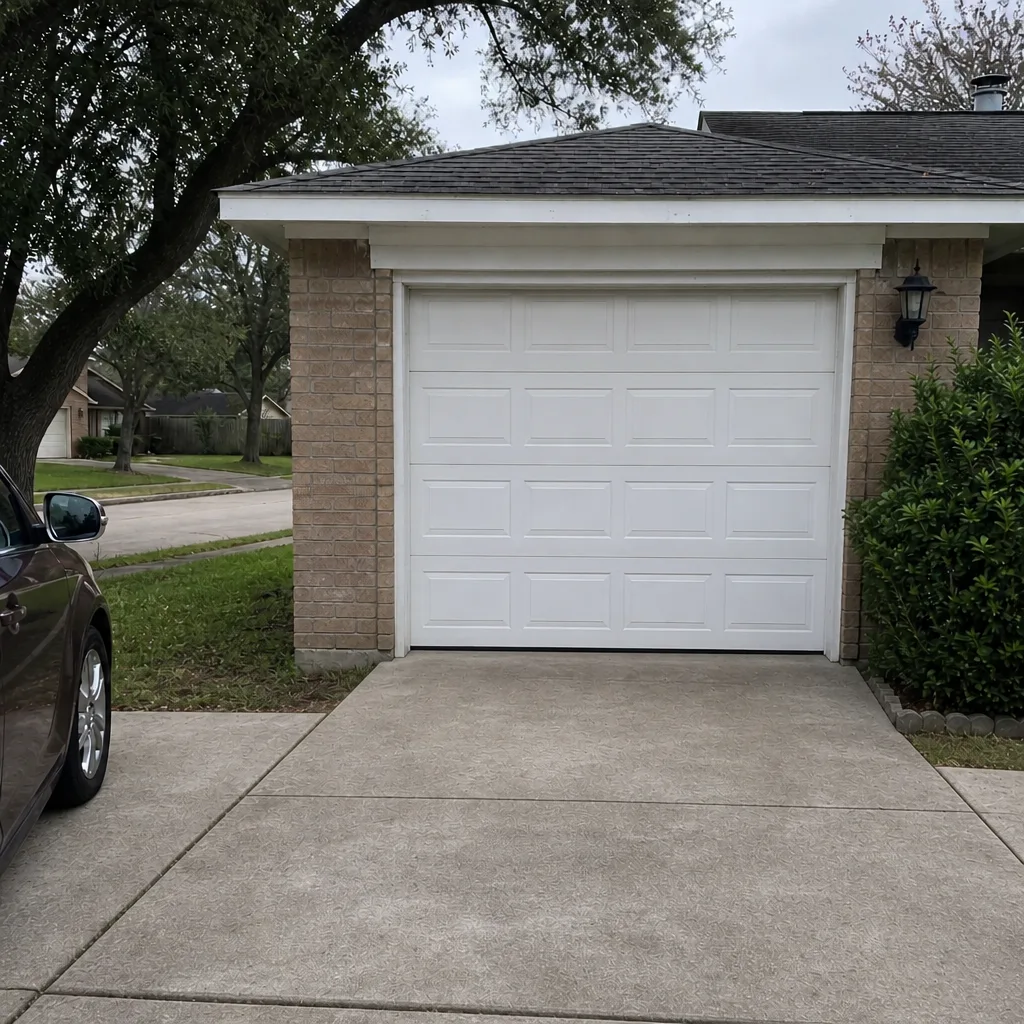
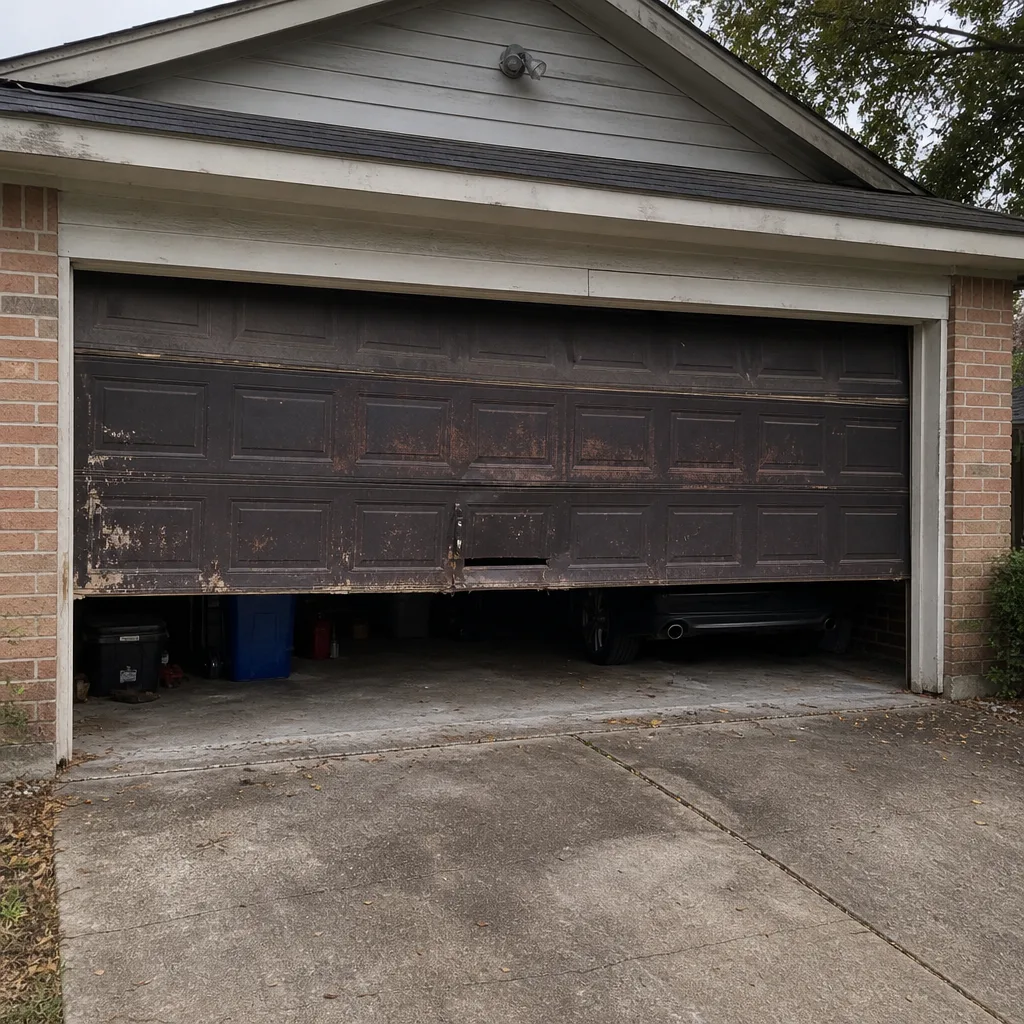
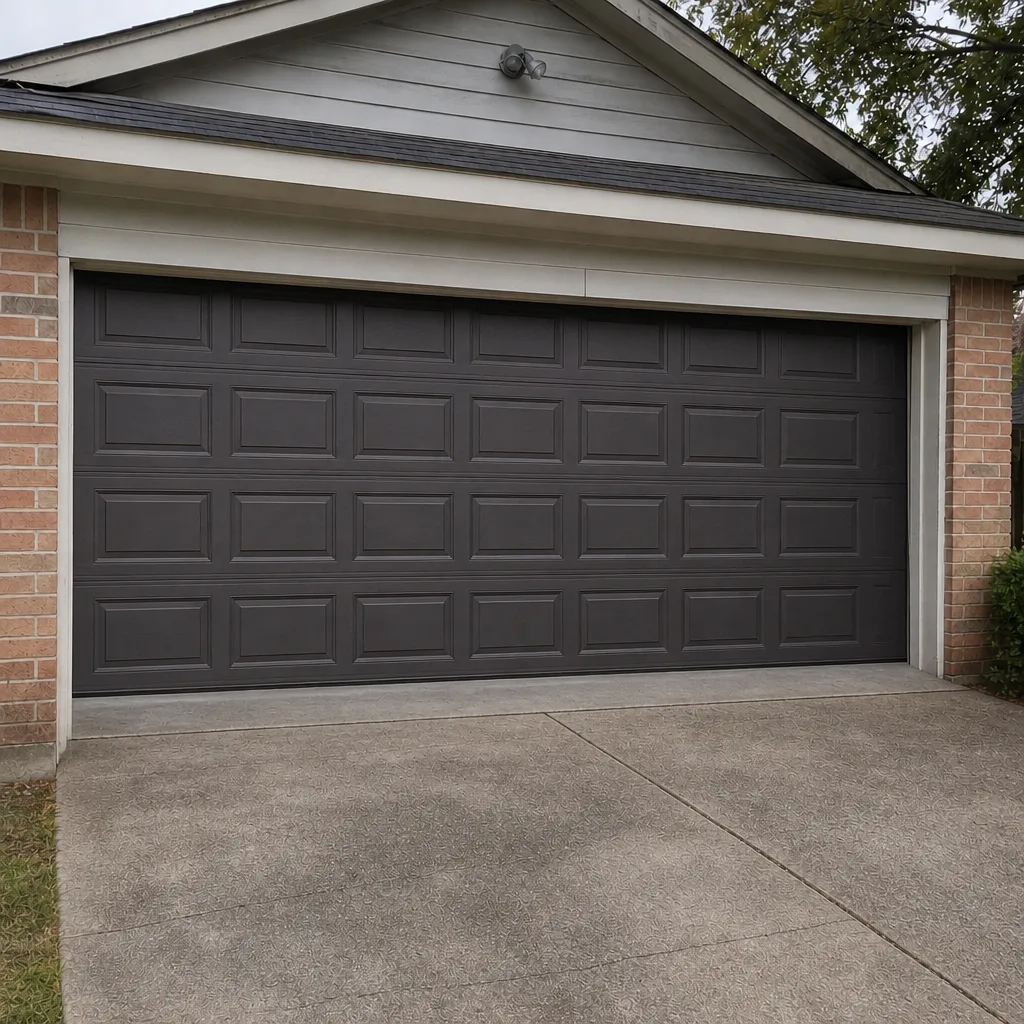
See the difference
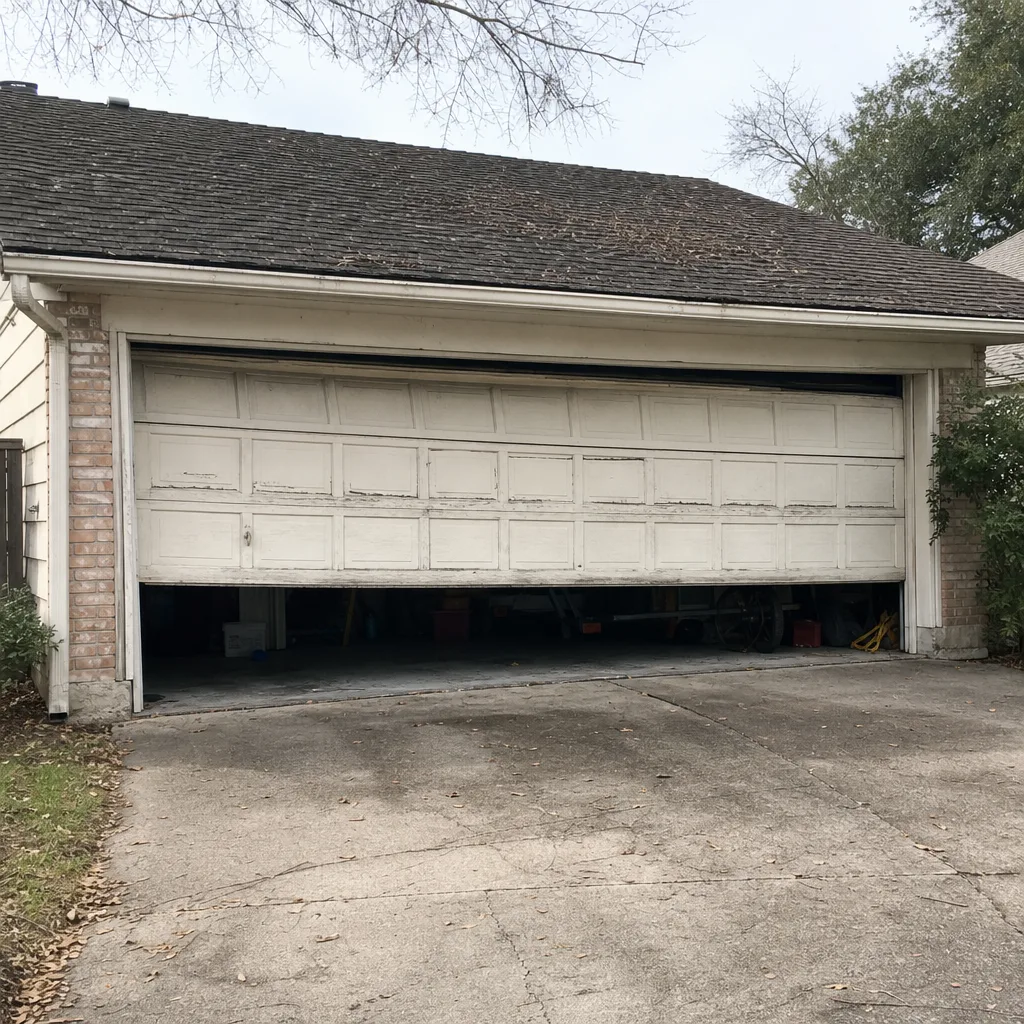 Before
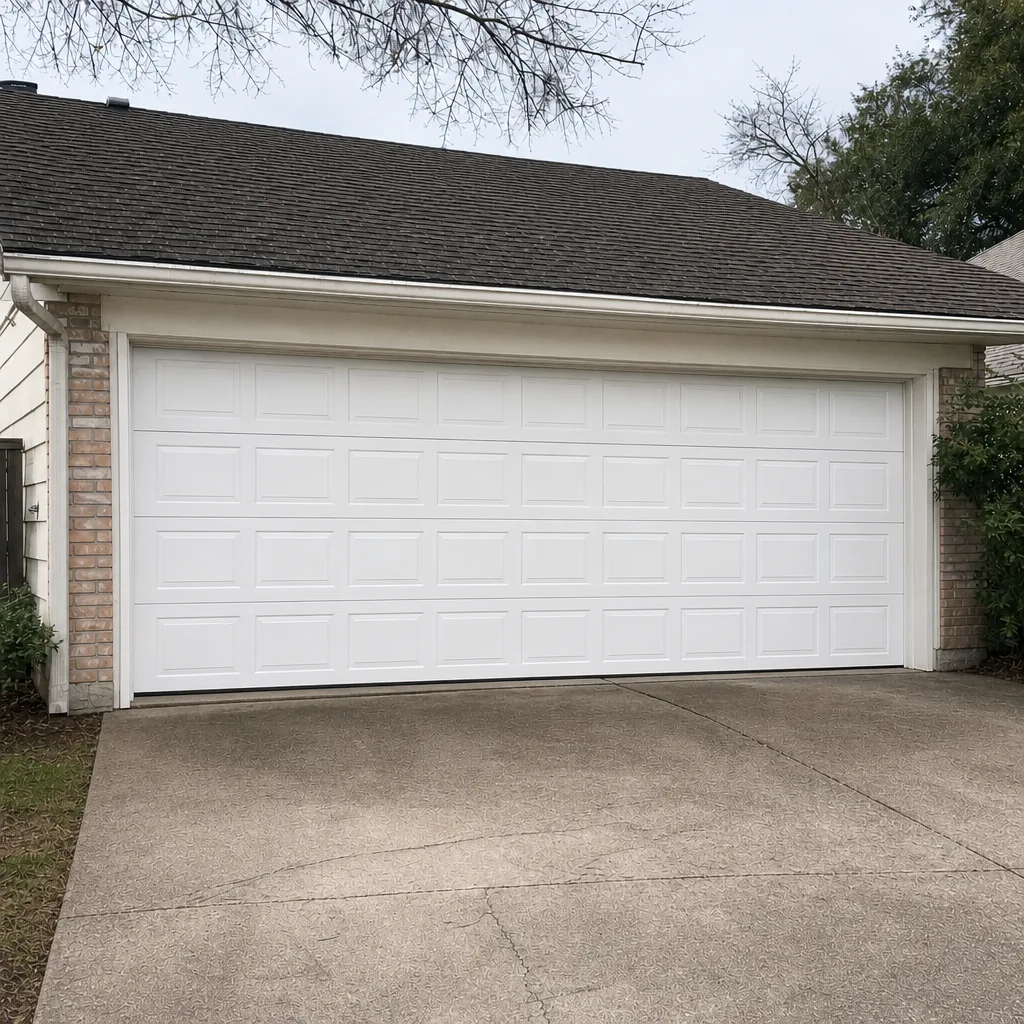 After
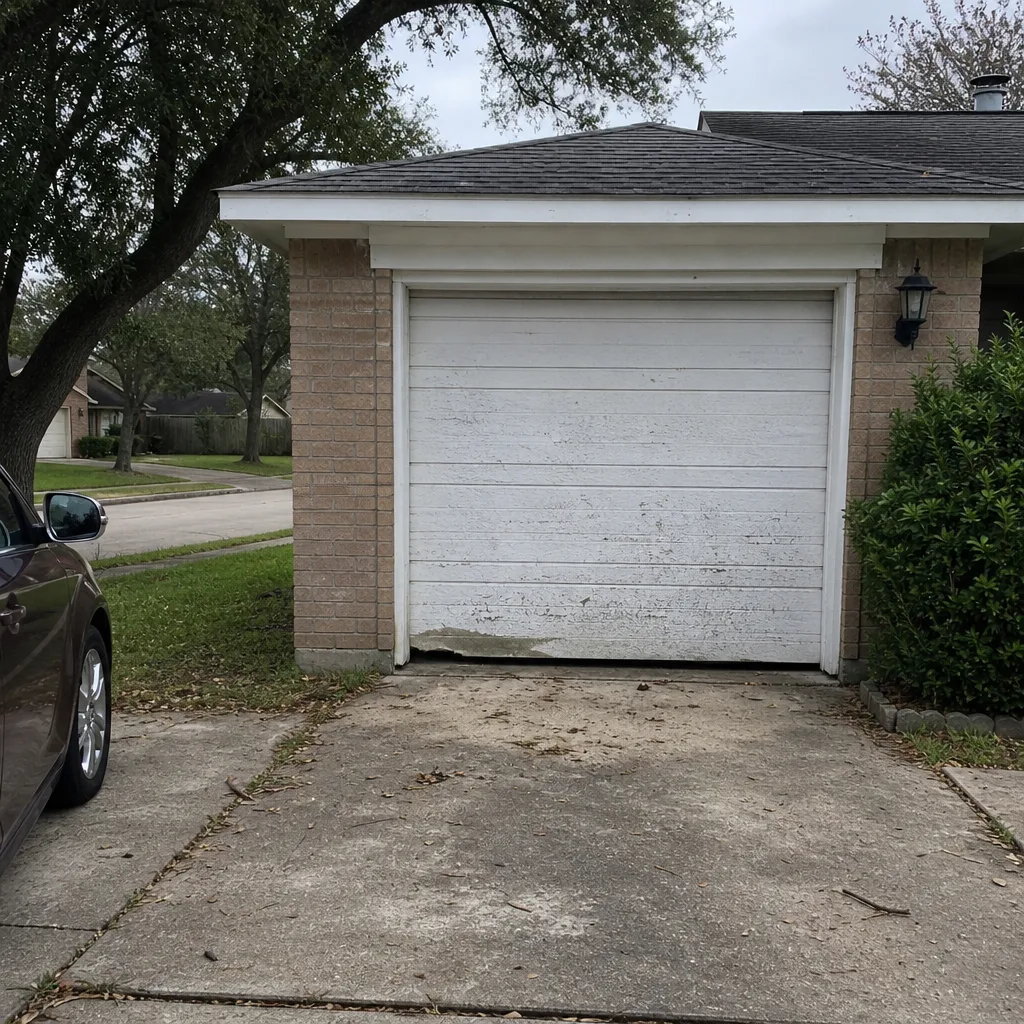 Before
 After
 Before
 After
When to Call a Professional
Call a professional if you’re replacing a door and don’t know the correct wind-load rating for your address, if your inspector or buyer’s agent has flagged a permit issue, if you’re facing a storm damage claim and need to sort out whether the door was permitted, or if the spring or opener on your existing door has failed. Springs carry serious injury risk and are not a homeowner job. Openers, especially smart models from LiftMaster or Chamberlain with myQ integration, need proper alignment and safety reverse testing that only a technician should do.
Sugar Land Garage Door Repair Pros offers free estimates in Sugar Land. Call (833) 508-9229. We answer 24/7. Fast dispatch from 7am to 7pm, Sunday through Friday. The price is quoted and agreed before any work starts, whether that’s a repair, a spring replacement, or a full door install with the permit pulled as part of the job. Our technicians have up to 15 years of experience, and they work on the door and opener brands you already have, including LiftMaster, Chamberlain, Clopay, and more. Our garage door opener repair team handles everything from a dead remote to a full motor replacement.
Frequently Asked Questions
Usually yes. A full door replacement typically requires a permit under City of Sugar Land or Fort Bend County rules, depending on your address. The permit confirms the door meets the wind-load rating required for this area and gives you the paper trail for resale and insurance. Repairs to springs, cables, rollers, and openers usually don’t need a permit. Call (833) 508-9229 for a free estimate and we’ll tell you which side of the line your job falls on.
It’s the jurisdiction that issues and inspects the permit. Homes inside Sugar Land city limits go through the city building department, and homes in unincorporated Fort Bend County go through the county. The rules overlap but aren’t identical, and a permit pulled in the wrong jurisdiction will fail inspection. The city-county boundary in Sugar Land isn’t obvious from the neighborhood, so confirm your address before the permit is filed.
Permit fees are set by the issuing jurisdiction, not by the contractor, and they vary by job scope. The fee is typically passed through as part of the total written estimate. Call (833) 508-9229 for a free estimate that includes the permit line – the written estimate sets the final price, and the price is agreed before any work starts.
Yes, a homeowner can usually apply for their own permit. But when you’re the applicant of record, you’re the responsible party if the install fails inspection. When the contractor pulls the permit, they are. Most homeowners are better served by the contractor pulling it, so the liability, paperwork, and inspection follow-through stay with the party who did the work. Call (833) 508-9229 if you’d like to talk through the options for your specific address.
It checks the door against the permit, the permit against the code, and the install against the manufacturer’s spec. That means wind-load rating documentation, bracket placement into structural framing, track alignment, header clearance, panel attachment, and safety reverse on any new opener. The most common failures in this area are bracket placement and header clearance, neither of which is visible once the door is up. Call (833) 508-9229 for a free estimate that includes the install documentation a final inspection will want to see.
It can. If a door fails during a storm event and the door was replaced without a permit, the adjuster may ask for the permit record and the door’s wind-load documentation. Without those, the claim on that component can be delayed or reduced, even when the storm was clearly the cause. The permit is the paper trail that answers those questions upfront. We can work with your insurer if a claim is involved, and our team at Sugar Land Garage Door Repair Pros can help you sort it out. Call (833) 508-9229.
The Bottom Line
Garage door permits in Sugar Land are less about paperwork and more about protection. A permit and final inspection confirm the door meets the wind-load code for your address, gives you a clean record for resale, and gives your insurance adjuster the documentation they’ll want if a storm ever puts the door to the test. Repairs usually don’t need a permit. Full replacements usually do. Let the contractor pull it, and check the door’s wind-load rating against your address before you buy. Skipping that step saves nothing worth saving.
If you’re planning a replacement, a repair, or sorting out a permit question before a sale, call (833) 508-9229 for a free estimate from Sugar Land Garage Door Repair Pros. We answer 24/7, with fast dispatch from 7am to 7pm, Sunday through Friday, and the written estimate sets the final price before any work begins.
Written by the team at Sugar Land Garage Door Repair Pros.